
Chicken Coop Size Calculator: Space, Eggs and Feed Cost
Most coop calculators repeat one figure, 4 square feet per bird inside and 10 in the run. That is one of two extension camps, not a consensus.
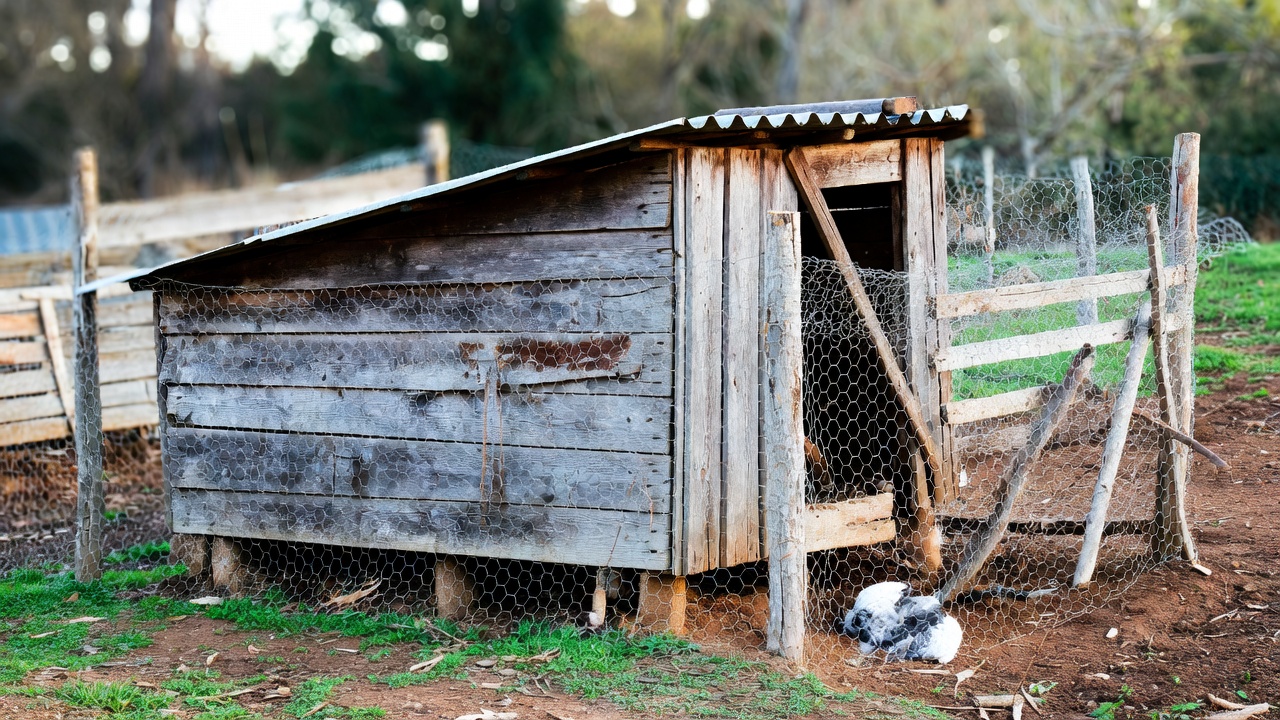
Chicken Coop Size Calculator
I have built two coops and rebuilt one of them, which is a polite way of saying I got it wrong the first time. So before this calculator existed I sat down with what seven extension services actually publish about coop space and read them side by side, which is not something the sizing widgets appear to have done. They do not agree. They split into two camps that differ by more than two and a half times, and the one number every calculator repeats — 4 square feet a bird inside, 10 in the run — is only one camp talking.
Penn State, the University of Maryland, Virginia Tech’s own Table 1 and Oklahoma State all publish 1.5 to 2 square feet per hen indoors. The Poultry Extension Collaborative, the University of Georgia and Texas A&M publish 3 to 4. Both are land-grant sources. Now, the run is not settled either: Penn State, Maryland and Virginia publish 8 square feet per laying hen, Oklahoma State publishes 8 to 10, and the Poultry Extension Collaborative publishes 10.
So this planner gives you the range, names who published each end of it, and then does the part the sizing widgets skip: what the flock will actually eat, what it will actually lay, and what a dozen of those eggs will actually cost you.
Plan your flock
Enter your flock size above. Results appear here.
Where the numbers come from
The space allowance split, in full
This is the table no coop calculator shows you. Both columns are land-grant extension publications. They do not agree.
| Source | Bantam | Laying hen | Large or heavy | Outdoor run |
|---|---|---|---|---|
| Penn State Extension | 1 | 1.5 | 2 | 4 / 8 / 10 |
| University of Maryland Extension | 1 | 1.5 | 2 | 4 / 8 / 10 |
| Virginia Cooperative Extension, Table 1 | 1 | 1.5 | 2 | 4 / 8 / 10 |
| Oklahoma State Extension | — | 1.5 to 2 | 1.5 to 2 | 8 to 10 |
| Poultry Extension Collaborative | — | 3 to 4 | 3 to 4 | 10 |
| Virginia Cooperative Extension, narrative text | 2 to 3 | 3 to 4 | 3 to 4 | 5 to 8 / 10 |
| University of Georgia Extension C969 | 0.75 to 1 | 3 to 3.5 | 3 to 3.5 | — |
| Texas A&M AgriLife Extension | — | 3 | 3 | — |
Virginia Cooperative Extension publishes both figures in the same document. Its narrative text says 3 to 4 square feet per laying hen; its Table 1 says 1.5. That is not a typo we found in a blog, it is the state of the literature. Every calculator that prints a single confident number is choosing a side without telling you.
What is agreed: 10 square feet per bird in the run is the one half of the famous rule that both camps support. If you build to one number in this whole page, build to that one.
Everything else inside the coop
| Item | Published figure | Sources and spread |
|---|---|---|
| Roost or perch space | 6 to 10 inches per bird | Penn State and Maryland publish 6; Texas A&M publishes 8; Virginia publishes 8 to 10 in text and 6 to 10 in its table. Bantams 4 inches (Penn State). |
| Roost height | 18 to 24 in (Penn State); 18 to 36 in (Texas A&M) | Bantams 12 to 18 in. Keep roosts higher than the nest boxes or the hens sleep in the nests. |
| Roost spacing and diameter | 12 to 14 in apart, at least 2 in diameter | Penn State (1 ft apart), Texas A&M (14 in), Maryland (2 in diameter minimum). |
| Nest boxes | 1 per 4 to 5 hens | Maryland, Georgia, Texas A&M and Oklahoma State. Penn State's small-scale housing page gives a slightly different rule: "Provide two nests for the first four hens. Then add a nest for every four additional hens." Its laying-flock management page separately calls for a minimum of four boxes regardless of flock size. The planner shows the Maryland ratio as the low figure and the Penn State rule as the high one. |
| Nest box size | 10x10 in to 12x12 in, about 24 in off the floor | Maryland 10x10; Penn State and Georgia 12x12; 3 to 4 in front lip, 2 to 3 in of bedding. |
| Feeder space | 2 to 6 linear inches per bird | Penn State 3; Maryland 2 to 3; Georgia 4 to 6; Virginia 2 to 3 for large birds, 1 for small. The tool uses 3 as the modal figure and shows the range. |
| Waterer space | 1 to 3 linear inches per bird | Penn State and Georgia 1; Maryland 2 to 3. Nipple drinkers: 1 per 6 to 8 birds (Penn State). |
| Brooding space, first 6 to 8 weeks | 0.5 sq ft per chick | Penn State. Pullets from 8 weeks: 2 sq ft (Texas A&M). |
Ventilation
No extension service publishes a vent area for a backyard coop — not one of the fourteen I read, including the single page in the whole extension system written specifically about it. What they publish instead is a test: damp litter or a smell of ammonia means there is not enough air moving for the number of birds you have. The full account, including the one number that is published, is on chicken coop ventilation.

Feed intake
| Bird and stage | Feed per day | Source |
|---|---|---|
| Mature laying hen | 0.25 lb (100 to 150 g) | Alabama Cooperative Extension ANR-2913; Oklahoma State Extension |
| Mature laying hen, planning figure including waste | about 0.29 lb | Derived from the University of Maryland 100-hen budget (80 bags of 50 lb over 550 days for 25 hens equivalent) |
| Chicks | 0.1 lb | Oklahoma State Extension |
| Hatch to point of lay, total | 13 to 15 lb per bird | Oklahoma State Extension |
| Day 1 to 6 weeks, starter | at least 4 lb per bird total | University of Georgia Extension C969 |
| Cold weather | up to 25% more | University of Minnesota Extension |
| Hy-Line Brown standard, week 18 to 33 | 87 to 91 g per day | Hy-Line Brown performance standards |
| Hy-Line Brown standard, week 34 to 48 | 98 to 103 g per day | Hy-Line Brown performance standards |
| Hy-Line Brown standard, week 49 onward | 105 to 110 g per day | Hy-Line Brown performance standards |
| Bantam | not published | No extension or breeder source publishes a bantam intake figure. The tool uses the standard-hen number and says so. |
Egg production, and what the flock really lays
| Figure | Eggs per hen per year | Source and context |
|---|---|---|
| US commercial average, 2025 | 288 | USDA NASS, Chickens and Eggs 2025 Summary: "The annual average production per layer on hand in 2025 was 288 eggs, down 1 percent from 2024." Note this is production per layer on hand across a 365-million-bird inventory, including birds mid-molt or at the end of lay, for the year ending 30 November 2025. It is not the same measurement as a breed's peak-year potential. |
| Commercial sex-linked hybrid | 240 to 280 | Penn State Extension, Successfully Raising a Small Flock of Laying Chickens |
| Commercial egg-type birds | 200 to 260 | Penn State Extension, Management Requirements for Laying Flocks — a different Penn State page |
| Single Comb White Leghorn | about 265 | Oregon State Extension |
| Enterprise budget assumption | about 256 | University of Maryland: flat 70% lay over a 550-day, two-year flock |
| Conservative budget assumption | about 182 | Oklahoma State Extension: "a chicken would lay an egg every other day" |
| Heritage type breed | 50 to 100 | Penn State Extension, Successfully Raising a Small Flock of Laying Chickens: "There is also great variability between strains." |
| Purebred poultry | 100 to 180 | Penn State Extension, Management Requirements for Laying Flocks — the same institution, a different page, a range that does not overlap the one above |
The gap between 50 and 288 is the whole story. Hatchery marketing quotes the top of that range. Penn State puts heritage type breeds at 50 to 100 eggs a year. If you are buying a heritage flock and budgeting on 300 eggs a hen, you are off by a factor of four or more.
And Penn State contradicts itself. Its page on raising a small laying flock says heritage type breeds lay 50 to 100 and commercial sex-linked hybrids 240 to 280. Its laying-flock management page says purebred poultry lay 100 to 180 and commercial egg-type birds 200 to 260. Both pages are live. The two purebred ranges do not overlap at all. We show you every one of those figures in the planner above rather than quietly picking the one we like.
The shape of the year matters as much as the total. UF/IFAS publishes the curve: production starts at 18 to 22 weeks, peaks around 90% about 6 to 8 weeks later, then declines to about 65% after 12 months of lay. Good layers run 50 to 60 weeks and then molt. Penn State assumes flocks stay above 60% production to 80 weeks of age.
Gap flagged No extension service publishes a percentage decline for the second or third laying year. We looked at Kentucky ("hens will lay fewer eggs each year", no number), Oregon State ("chickens produce well until they are 2 to 3 years old, and then egg production declines") and Minnesota (peak in the first two years). The 12.5%-per-year figure this tool applies to years two and three is derived from Hy-Line Brown measured hen-day rates — 92.8 to 96.6% at week 30, 85.3 to 89.2% at week 70, 76.5 to 80.2% at week 90 — and is labeled as derived everywhere it appears. It is not a quoted extension figure and we are not going to present it as one.
Water, light, mortality
| Item | Published figure | Source |
|---|---|---|
| Water, cool weather | 0.05 gal per hen per day | Penn State: at least 5 gallons per 100 birds daily |
| Water, planning figure | 0.075 gal per hen per day | Oklahoma State Extension |
| Water, hot weather | about 0.106 gal per hen per day | University of Kentucky Table 12.1, layers at 89.6 degrees F |
| Water to feed ratio | about 2:1 by weight | University of Kentucky; Alabama Extension. Under extreme heat stress, requirements "may easily quadruple". |
| Light to sustain lay | 14 hours per day | University of Kentucky ASC-192; UF/IFAS; Poultry Extension Collaborative |
| Light below which lay stops | under 12 hours | University of Kentucky: "production will decrease and often stops" |
| Light ceiling | 16 hours, not more | Penn State. Birds need at least 15 minutes of darkness (Oklahoma State). |
| Mortality, small flocks | about 10% per year, 20% over two years | University of Maryland layer budget and small-flock economics page |
| Labor | about 15 minutes per day | Oklahoma State Extension budgeting fact sheet |
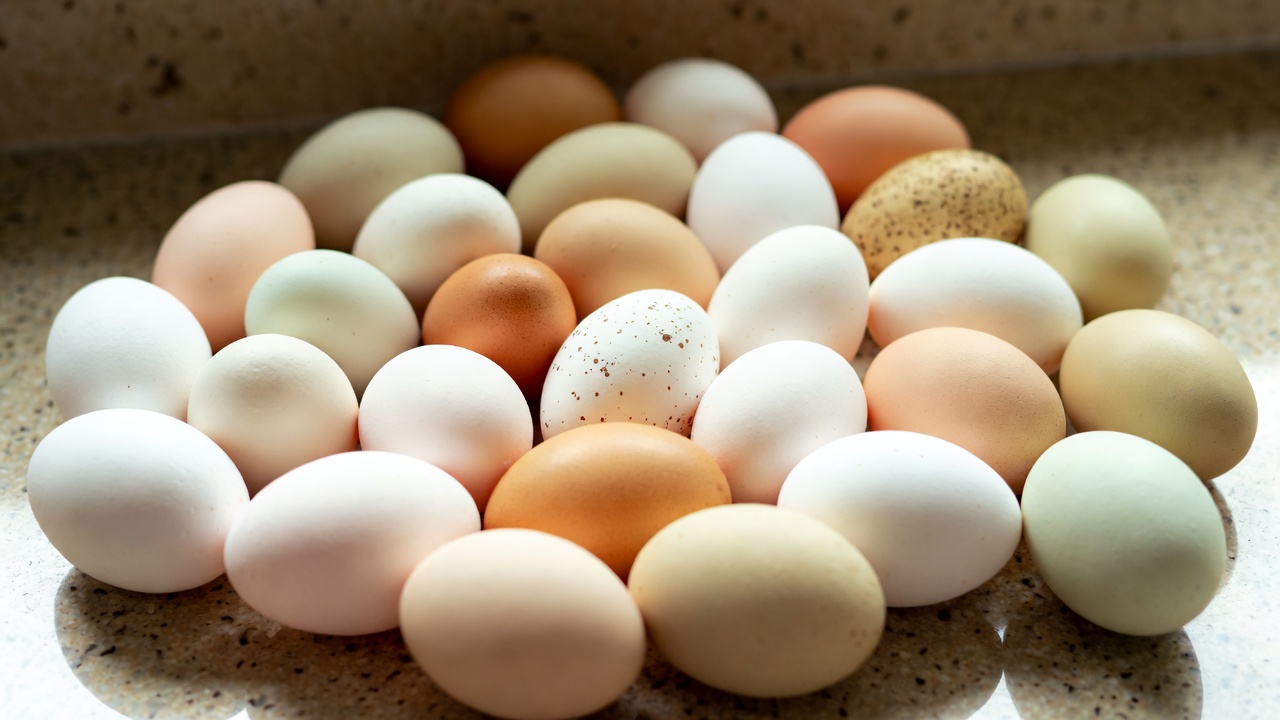
What a dozen eggs actually costs
| Published budget | Layer feed price | Cost per dozen | Source |
|---|---|---|---|
| Small Layer Flock Budget, 2010 data | $11.00 per 50 lb | $1.37 | University of Maryland Extension, Economics of Small Poultry Flocks |
| Small Flock Layer Budget, 100 hens, updated 2022 | $14.00 per 50 lb | $2.07 | University of Maryland Extension (Dale M. Johnson), 3,208 dozen over two years, total feed $4,972 |
Gap flagged USDA publishes no retail layer-feed price series. We checked the AMS Oklahoma Retail Feed Cost Report, which carries cattle cubes, creep pellets, corn, cottonseed meal, alfalfa and bulk commodities — and no poultry line items at all. That is why the feed price in this tool is a field you fill in rather than a number we assert.
The method, in plain text
coop_low_sqft = hens x low_space_for_bird_class
coop_high_sqft = hens x high_space_for_bird_class
run_sqft = hens x run_space_for_bird_class
roost_feet = hens x roost_inches_per_bird / 12
nest_boxes_low = maximum of 2 and round_up(hens / 5) [Maryland ratio]
nest_boxes_high = 2 if hens is 4 or fewer, else 2 + round_up((hens - 4) / 4) [Penn State rule]
feeder_inches = hens x 3 ; waterer_inches = hens x 1
feed_lb_per_year = hens x intake_lb_per_day x (365 + cold_months x 30.4 x 0.25)
bags_per_year = round_up(feed_lb_per_year / 50)
feed_cost_per_year = feed_lb_per_year / 50 x price_per_bag
eggs_per_year = hens x published_eggs_basis x age_multiplier
age_multiplier = 1.00 year one, 0.875 year two, 0.766 year three [DERIVED]
feed_cost_per_dozen = feed_cost_per_year / (eggs_per_year / 12)
birds_to_order = round_up(hens x 1.10)
A worked example you can check by hand
Six standard laying hens with a run, planned on the Maryland enterprise-budget basis of 256 eggs, first laying year, 0.25 lb of feed a day, three cold months, feed at $14.00 per 50 lb bag:
- Coop floor: 6 x 1.5 = 9 sq ft at the Penn State and Maryland end; 6 x 4 = 24 sq ft at the Poultry Extension Collaborative end. A 4x6 coop meets the high figure.
- Run: 6 x 10 = 60 sq ft. That is the number both camps agree on.
- Roost: 6 x 6 in = 36 in = 3 linear feet at the low published figure; 6 x 10 in = 5 feet at the high.
- Nest boxes: 2 by the Maryland ratio of one per four to five hens; 3 by Penn State's rule of two nests for the first four hens plus one for every four additional. Penn State's laying-flock page separately calls for a minimum of four boxes regardless of flock size.
- Feed: 6 x 0.25 x 365 = 547.5 lb before the winter adjustment. Three cold months at 25% more adds 6 x 0.25 x 91.2 x 0.25 = 34.2 lb, so 582 lb a year, which is 12 bags and $163 at $14 a bag.
- Eggs: 6 x 256 = 1,536 eggs, which is 128 dozen, about 30 eggs a week.
- Feed cost per dozen: $163 / 128 = $1.27. Feed is not the whole cost — Maryland's full budget, which includes bedding, birds and other inputs, lands at $2.07 a dozen.
- Water: 6 x 0.05 = 0.3 gal a day in cool weather, rising to about 0.64 gal a day at 90 degrees F.
- Birds to order: 6 x 1.10 = 7, to absorb the roughly 10% annual mortality Maryland reports for small flocks.
How to read your result
- Build to the high end of the coop range if you can afford the lumber. The literature gives you a defensible floor at 1.5 square feet, but nothing in it says crowding is better. The Poultry Extension Collaborative's point about confinement is the operative one: if winter keeps the birds inside, the indoor requirement goes up.
- The run number is the one to take seriously. 10 square feet per bird is the only figure both camps publish.
- Where two sources disagree, plan on the lower number. Penn State publishes two non-overlapping purebred egg ranges on two live pages. Nobody is going to be upset by a surplus of eggs.
- Feed cost per dozen only counts feed. Maryland's published $2.07 includes birds, bedding and other inputs. If your feed-only number looks cheap, that is because it is incomplete, not because you have beaten the budget.
- Plan the flock for year two, not year one. Production falls, mortality accumulates, and the coop you build this spring is the coop you have in three years.
- Check your local ordinance before you buy lumber. Rooster rules, setbacks, flock caps and permit requirements are municipal and vary enormously. No national source covers them.
What we will not guess
Other coop calculators print a number for every one of these. No extension service, USDA agency or breeder guide publishes one, so we leave them blank:
- A ventilation ratio. Checked PEC, Virginia, Penn State and Texas A&M. None publishes a quantitative rule. The "1 sq ft per 10 sq ft" figure is blog-only.
- A second- and third-year lay decline percentage. Not published by any extension source. Our multiplier is derived from Hy-Line measured standards and labeled as derived.
- A current USDA layer feed price. AMS publishes no poultry retail feed series. Enter your own.
- Bantam daily feed intake. No source publishes one. Bantam results use the standard-hen figure and will overestimate.
- The round-feeder circumference rule. The idea that usable space on a hanging feeder equals pi times its diameter is folk-derived; no extension source states it.
- Which breeds do not roost. No extension source addresses it. Virginia notes only that meat-type birds use low platforms instead of perches.
- A quarantine period for new birds. USDA APHIS Defend the Flock publishes six core biosecurity practices but no isolation day-count or distance.
Final Thoughts
Build to the strict end of every range on this page. Remember that you cannot add square footage to a finished coop without a saw! Floor space, roosts, nests, feeder space — the published figures disagree by a factor of two and a half, and I have never once regretted the extra square foot. Crowding is what turns a healthy flock into a feather-picking, damp, ammonia-smelling problem, and you cannot add floor area in February.
Two pieces of this deserve their own page and now have one: how many nesting boxes per chicken, where eleven institutions give answers from two boxes to four for the same dozen hens, and chicken coop ventilation, where none of them give you a number at all.
Related on Current Homesteading
- Best chicken coops of 2026
- Predator-proofing checklist
- Goat and livestock gestation calculator
- Frost dates by ZIP code
- Raised bed soil calculator
Frequently asked questions
How much space does a chicken need?
There are two published answers, not one. Penn State, the University of Maryland, Virginia Tech's Table 1 and Oklahoma State publish 1.5 to 2 square feet of indoor floor space per laying hen. The Poultry Extension Collaborative, the University of Georgia and Texas A&M publish 3 to 4. Both camps publish 10 square feet per bird for the outdoor run, which is the figure to build to with confidence.
What size coop do I need for 6 chickens?
Between 9 and 24 square feet of indoor floor, depending on which published standard you follow, plus 60 square feet of run. A 4x6 coop satisfies the most generous extension figure. You also want 3 to 5 linear feet of roost and at least 2 nest boxes, though Penn State separately recommends a minimum of four regardless of flock size.
How many chickens fit in a 10x10 coop?
100 square feet holds 25 hens at the conservative published rate of 4 square feet each, 50 hens at 2 square feet, or 66 at the 1.5-square-foot minimum. Bear in mind that the run, not the coop, is usually the binding constraint: 25 hens need 250 square feet of run at the agreed 10-square-feet-per-bird figure.
How much feed does a chicken eat per day?
A quarter of a pound, or 100 to 150 grams, for a mature laying hen — Alabama Extension and Oklahoma State both publish that figure. Ten hens go through a 50-pound bag in roughly 20 days. Minnesota Extension reports intake can rise up to 25 percent in cold weather. Hy-Line's published standards run 87 to 91 grams a day early in lay and 105 to 110 grams later, which brackets the extension figure.
How many eggs will my chickens actually lay?
Somewhere between 50 and 288 a year, and which end you land on depends almost entirely on breed. Penn State puts heritage type breeds at 50 to 100 eggs a year and commercial sex-linked hybrids at 240 to 280 on one page, and purebred poultry at 100 to 180 with commercial egg-type birds at 200 to 260 on another. Both pages are live, and the two purebred ranges do not overlap. USDA NASS reports the 2025 commercial average at 288 eggs per layer on hand, which is an inventory-wide figure including birds mid-molt, not a breed potential. UF/IFAS publishes the shape of the year: lay peaks around 90 percent about 6 to 8 weeks after it starts, then falls to about 65 percent after 12 months. Any single "300 eggs a year" number you see is the very top of a very wide range.
Sources
- Poultry Extension Collaborative, Space Allowances in Housing for Small and Backyard Poultry Flocks
- Poultry Extension Collaborative, Ventilation in Small and Backyard Poultry Flock Housing
- Poultry Extension Collaborative, Raising Chickens for Egg Production
- Penn State Extension, Small Scale Poultry Housing
- Penn State Extension, Successfully Raising a Small Flock of Laying Chickens
- Penn State Extension, Management Requirements for Laying Flocks
- University of Maryland Extension, Housing Requirements
- University of Maryland Extension, Economics of Small Poultry Flocks
- University of Maryland Extension, Small Flock Layer Budget - 100 (Dale M. Johnson)
- Virginia Cooperative Extension, Small-scale Poultry Housing (2902-1092)
- Oklahoma State University Extension, Backyard Flock Production
- Oklahoma State University Extension, Simple Budgeting and Pricing Calculations for Backyard Hens
- University of Georgia Extension, Management Guide for the Backyard Flock (C969)
- Texas A&M AgriLife Extension, The Small Laying Flock
- Alabama Cooperative Extension System, Feeding the Laying Hen (ANR-2913)
- University of Minnesota Extension, Caring for chickens in cold weather
- University of Minnesota Extension, Raising chickens for eggs
- University of Florida IFAS Extension, Factors Affecting Egg Production in Backyard Chicken Flocks (PS-35/PS029)
- Oregon State University Extension, Why Did My Chickens Stop Laying? (PNW 565)
- University of Kentucky, Poultry Production Manual, Chapter 12
- USDA National Agricultural Statistics Service, Chickens and Eggs 2025 Summary (February 2026)
- USDA APHIS, Defend the Flock
- USDA Agricultural Marketing Service, Oklahoma Retail Feed Cost Report
- Hy-Line International, Hy-Line Brown Alternative Systems Performance Standards
[IMAGE NEEDED: at least 1200px wide featured image. Suggested subject: a backyard coop and attached run photographed from outside at an angle that shows both structures, with hens visible in the run. Alt text: backyard chicken coop with attached run and laying hens.]
Download the data
Every published value behind this tool is in one CSV, with the source organization, publication title and URL on each row. Forty-nine rows, including the rows where the entry is that no primary source exists.
ch_coop_flock_reference_2026-08.csv (CSV, updated August 2026)
This compilation is published under a Creative Commons Attribution 4.0 license. Reuse it, and please link back to this page. The underlying extension publications remain the property of their institutions and are cited individually above.