Best Chicken Coop: The 2026 Homestead Buyer’s Guide
The best chicken coop is the one still standing — and still predator-tight — ten years after you set it in the yard. With more households keeping layers than at any point in recent memory, the market now runs from $500 recycled-plastic houses to $5,000 walk-in coops built like small barns. This guide ranks four coops from OverEZ, Carolina Coops, Nestera, and Omlet by flock capacity, predator protection, cleaning workload, and how long each one lasts in real weather.
Last updated: October 10, 2026 · Originally published July 3, 2026
Every pick comes from a dedicated coop manufacturer that sells direct, publishes full specifications, and stands behind its build with a real warranty. We compared current models, materials, and owner feedback to find the best chicken coop for each flock size and homestead setup.
How We Ranked the Best Chicken Coop Picks for 2026
A coop earns its keep in three ways: it protects the flock at night, it keeps eggs clean and collectable, and it doesn’t eat your weekends in maintenance. We weighted predator security first — solid latches, tight construction, and no gaps a raccoon can work open. Capacity came second, measured against the manufacturer’s own bird count and the space rule most extension services teach: 3 to 4 square feet of interior floor per standard hen, more if birds spend weather days inside. Third, we looked at cleaning design, ventilation, and material lifespan, because a coop that’s easy to keep dry and fresh keeps a flock laying.


Best Chicken Coop Comparison Table
| Model | Price | Capacity | Material | Warranty | Best For |
|---|---|---|---|---|---|
| OverEZ Large | $2,099 | Up to 15 chickens | Wood, made in USA | Limited | Established flocks |
| Carolina Coops American Coop | From $4,999.99 | Walk-in, sized by model | Wood frame, covered run | Limited | Buy-once homesteads |
| Nestera Large | $539–$789 | 2–15 hens by size | Recycled plastic | 25 years | Low-maintenance flocks |
| Omlet Eglu Cube | From $1,399 with run | 6 large hens | Insulated twin-wall plastic | 10 years | Mobile small flocks |
OverEZ Large Chicken Coop — Best Overall for Homestead Flocks
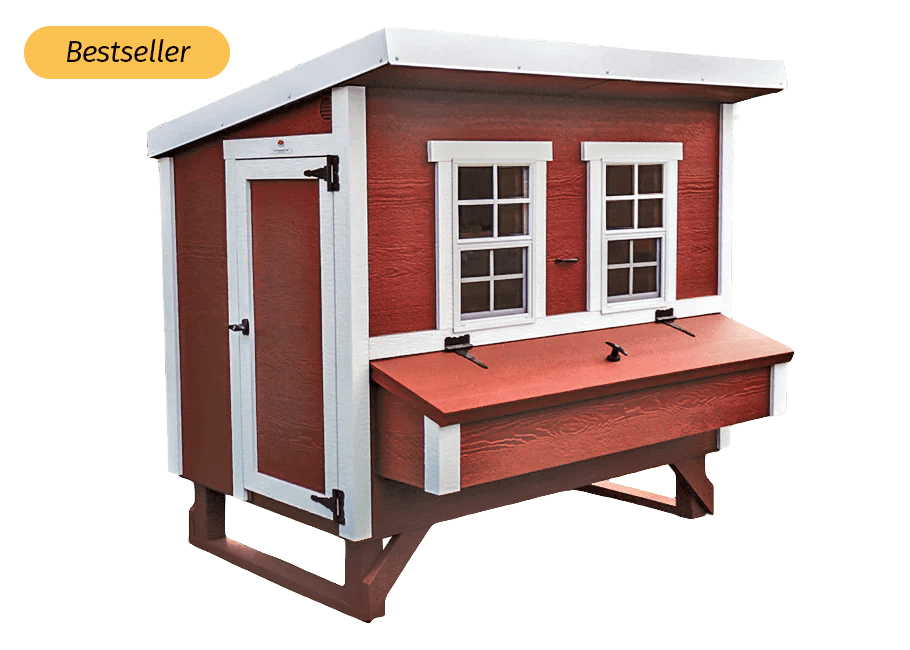
The OverEZ Large Chicken Coop houses up to 15 chickens and arrives as pre-built panels that assemble in under an hour with a drill. Amish-trained craftsmen build each coop in the USA from solid wood, and the design handles both directions of hard weather — high-humidity Southern summers and subfreezing Northern winters — without modification.
At $2,099 it sits in the middle of the market, and the capacity math works out favorably: fifteen birds puts the per-hen cost below most smaller prefab houses. Nesting boxes are accessible from outside, so morning egg collection doesn’t require stepping inside, and the full-height design means cleaning happens standing up. For a homestead running a working flock of a dozen layers, this is the best chicken coop in its price range.
Carolina Coops American Coop — Best Walk-In Chicken Coop
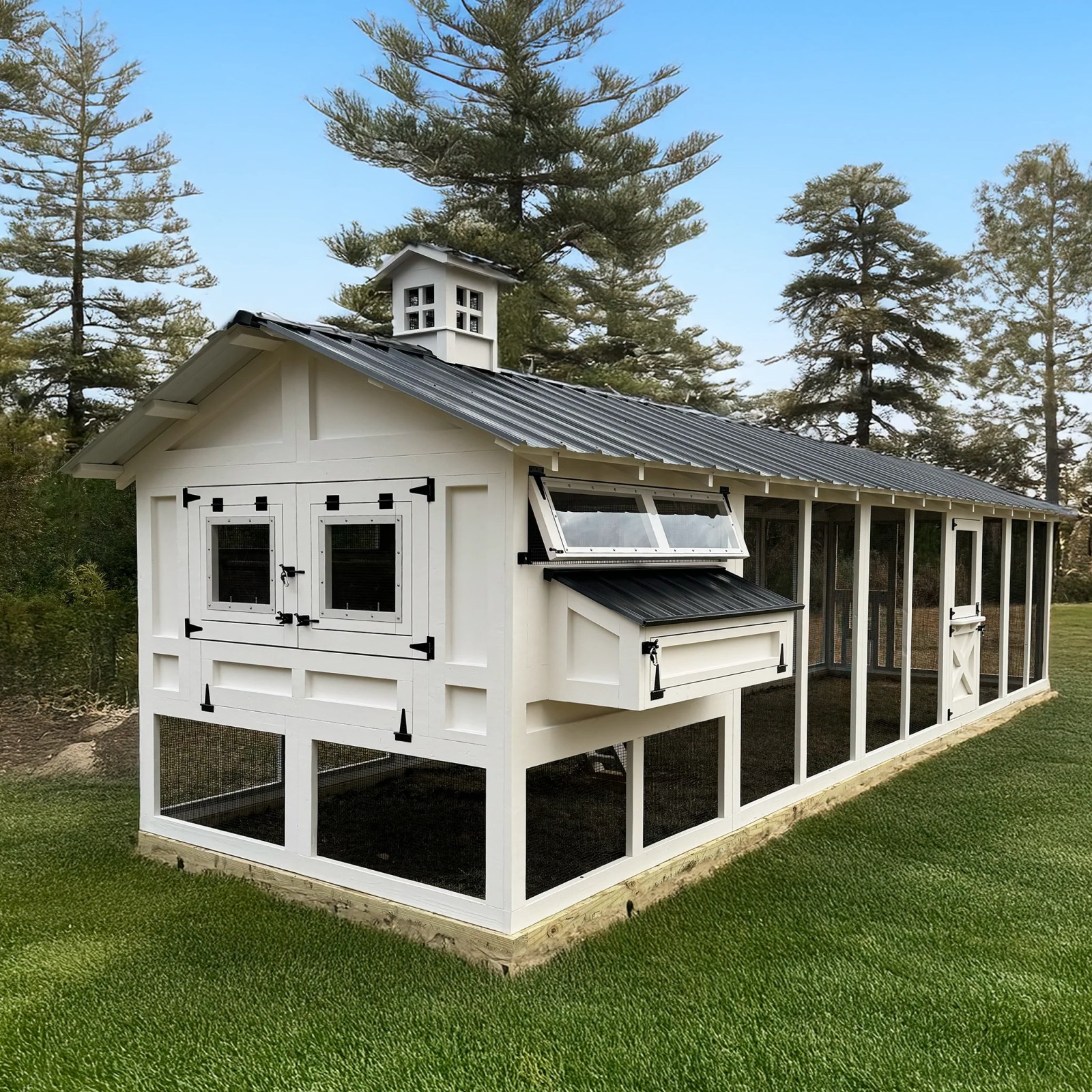
The American Coop by Carolina Coops is the buy-once answer. Starting at $4,999.99, it pairs a walk-in henhouse with a covered, fully enclosed run, built with the kind of framing you’d expect on a garden shed rather than a chicken house. Carolina Coops designs the whole structure around predator resistance — a priority that pays off every night a raccoon tests the perimeter.
The company builds each coop to order in six configurations, and the deep-litter-friendly henhouse design cuts cleaning to a few sessions a year. This is the most expensive pick in this guide by a wide margin, and it earns the position: for a permanent homestead installation that will outlast every bird you ever raise, the American Coop is the standard other builders measure against.
Nestera Large — Best Low-Maintenance Chicken Coop

The Nestera coop line takes the opposite approach: recycled plastic panels, three sizes housing 2 to 15 hens, and a 25-year warranty — the longest coverage of any coop in this guide. Prices run $539 to $789 depending on size and style, which makes Nestera the least expensive path to a serious coop that isn’t a disposable big-box product.
Plastic solves the two problems that end most wooden coops: rot and mites. Panels wipe clean or hose down in minutes, there are no porous surfaces for parasites to colonize, and the recycled material never needs paint or sealant. Refined over twenty years, the design ventilates well in summer and holds body heat in winter. For keepers who want the flock without the carpentry, this is the best chicken coop for minimal upkeep.
Omlet Eglu Cube — Best Mobile Chicken Coop

The Omlet Eglu Cube houses six large hens in an insulated twin-wall plastic body that works like a cooler in reverse — warm in winter, shaded and ventilated in summer. Configured with an attached run and optional wheels, it starts around $1,399, and the wheel-and-handle system lets one person move the whole setup to fresh grass in a few minutes.
That mobility is the point. Rotating the coop across the yard spreads manure where you want it, keeps the run floor from going to mud, and gives the flock fresh forage weekly. The smooth plastic interior wipes clean, the 10-year warranty covers the body, and Omlet’s anti-tunnel run skirting stops diggers at the perimeter. For a small flock on a suburban homestead, the Eglu Cube is the best chicken coop that doesn’t require a permanent footprint.
What Matters Most in the Best Chicken Coop for Your Homestead
Space determines flock health before any other feature. Plan on 3 to 4 square feet of interior coop space per standard hen plus 8 to 10 square feet of run, and treat manufacturer bird counts as maximums rather than targets. Crowded birds peck, stop laying, and get sick.
Predator protection is where inexpensive coops fail first. Look for covered runs, hardware cloth rather than chicken wire, latches a raccoon can’t rotate, and skirting that stops digging predators. Our predator-proofing checklist walks the full 12-point inspection, and for the predators that keep coming back, we’ve covered quiet predator response on the homestead as well.
Ventilation without draft keeps a flock laying through both heat and cold. Vents belong high, above roost level, where they exchange air without blowing on the birds. Biosecurity matters more than ever with avian influenza still circulating — the USDA’s Defend the Flock program publishes free checklists, and our bird flu protection guide covers the routine that keeps wild birds and your layers separated.
Best Chicken Coop FAQ
What is the best chicken coop for a homestead?
The OverEZ Large is the best chicken coop for most homestead flocks: it houses up to 15 chickens, assembles in under an hour, and is built in the USA from solid wood. For small flocks, the Omlet Eglu Cube offers insulation and mobility, and Nestera’s recycled plastic coops carry a 25-year warranty.
How much space do chickens need in a coop?
Standard hens need 3 to 4 square feet of interior coop floor each, plus 8 to 10 square feet per bird in the run. Bantams need slightly less, and heavy breeds slightly more. When in doubt, size up — extra space prevents pecking and keeps the coop drier.
Is a plastic or wooden chicken coop better?
Plastic coops resist rot and red mites and clean up with a hose, which makes them the lower-maintenance choice. Wooden coops insulate naturally, handle larger flock sizes, and suit permanent installations. Match the material to your climate and how much upkeep you’ll realistically do.
How much does a good chicken coop cost?
A durable manufacturer-built coop runs from about $539 for a small recycled-plastic house to $4,999.99 and up for a walk-in coop with covered run. Flimsy kits under $300 typically last one to two seasons, so a well-built coop costs less per year over its lifespan.
What makes a chicken coop predator-proof?
Half-inch hardware cloth on every opening, two-step latches raccoons can’t work open, a covered run, and buried or skirted fencing that stops diggers. Raccoons account for about a third of small-flock predator losses, so build to defeat clever hands first.
More Poultry Guides from Current Homesteading
- Predator-Proofing Your Chicken Coop: A May Pre-Summer Checklist
- Best Egg Incubator: The 2026 Homestead Hatching Guide
- Bird Flu and Backyard Chickens: How to Protect Your Flock in 2026
- How to Raise Chickens on a Budget
- How To Introduce a New Generation to an Established Chicken Flock
- Homegrown Eggs: Are They Safe?


Reader Favorites
Homestead reference charts
Three field guides worth bookmarking — canning times, cellar storage, and safe cooking temps.
| Food | Pressure | Pint |
|---|---|---|
| Green beans | 10 lb | 20m |
| Corn | 10 lb | 55m |
| Tomatoes | water bath | 35m |
USDA/NCHFP processing times & pressures for common foods.
View full chart →| Item | Store | Keeps |
|---|---|---|
| Onions | cool, dry | 9 mo |
| Potatoes | cellar | 4–6 mo |
| Apples | cellar | 6 mo |
How long fruit & veg keep in the cellar, fridge and freezer.
View full chart → Network| Doneness | Target |
|---|---|
| Rare | 125–130°F |
| Medium-rare | 130–135°F |
| Well-done | 160°F+ |
Safe pull temps for steak & burgers, from Popular BBQ.
View full chart →