Suppressors on the Homestead: Predator Control, Hearing Protection, and the 42-State Legal Map
By Chad Dyer · Published April 24, 2026 · 9 min read
Last updated: October 10, 2026 · Originally published April 24, 2026
Short answer: A suppressor (legally called a silencer) is an ATF-regulated rifle accessory that reduces muzzle report by 20–35 decibels. On a working homestead it earns its keep on three jobs: predator and varmint control without spooking the livestock, humane single-shot dispatch, and hearing protection during routine pest management. Suppressors are legal to own in 42 states and legal to hunt with in 41. As of January 1, 2026, the $200 federal tax stamp has been eliminated under the One Big Beautiful Bill Act (H.R. 1) signed on July 4, 2025. Acquisition still requires an ATF Form 4, fingerprints, and a background check — but eForm 4 individual approvals are now running 4–11 days, with some as fast as 3. You buy the can, do the paperwork, wait a week or two, and pick it up.
The Practical Case, Not the Mall-Ninja Case
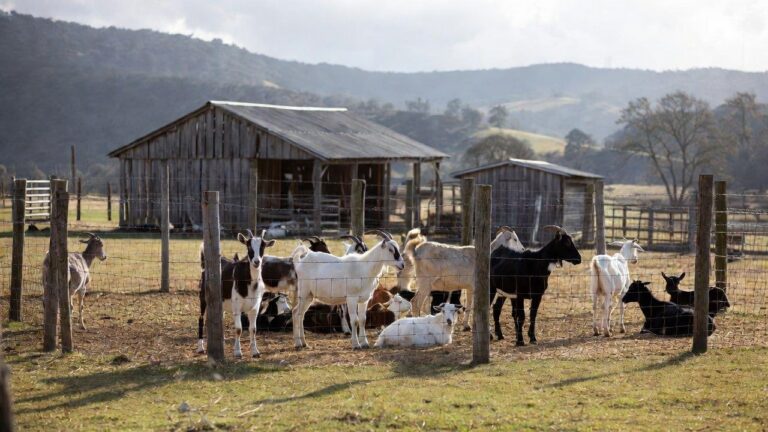
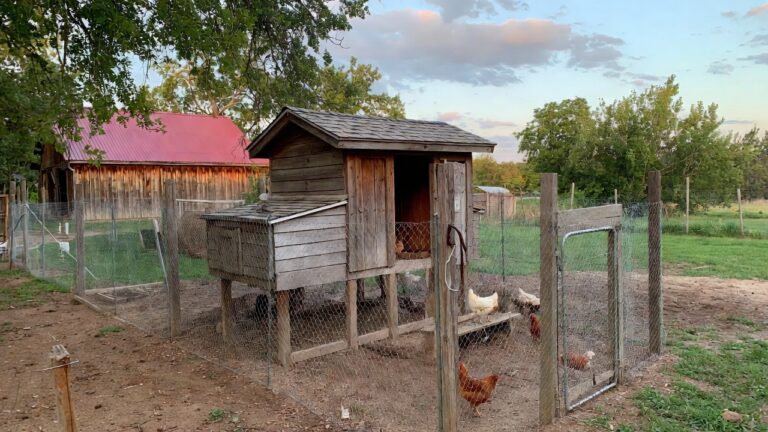
If you run chickens, small ruminants, or a kitchen garden in coyote, raccoon, groundhog, or feral hog country, you already know the arithmetic: a $15 live trap catches one raccoon; a rifle catches the rest of the family too. The practical objection to using a rifle for predator work has never been the tool. It’s the noise.
A rifle shot at 4 a.m. behind the coop wakes the neighbors, stampedes the livestock, scatters the rest of the hog sounder before you’ve cleared more than one, and — worst for long-term property management — teaches every other predator within a half-mile exactly where the easy food is and that showing up during quiet hours is now a fatal idea. The animals adapt. Your problem migrates to 2 a.m.
A suppressed .22 WMR or .223 solves those problems in one accessory. A suppressed rifle shot is quieter than a typical lawnmower. It doesn’t send steers through a fence. It doesn’t scatter groundhogs off the whole field at the first report. And it doesn’t teach the rest of the neighborhood’s wildlife to change its schedule.
Four jobs a suppressor actually does on a working homestead
- Predator and varmint control. Coyotes, raccoons, groundhogs, ground squirrels, feral hogs, nuisance opossums in the coop. Suppressed rifles allow follow-up shots because the sound signature rarely clears the field.
- Humane livestock dispatch. A single-shot dispatch on an old ewe, a finished hog, or a cull steer without sending the rest of the herd through a fence or up a hillside.
- Hearing conservation. OSHA says any unprotected exposure above 140 dB causes immediate, cumulative hearing damage. An un-suppressed .223 measures around 165 dB at the shooter’s ear. A suppressed .223 runs 130–135 dB — below the damage threshold, above the inconvenience threshold.
- Neighbor relations. If your nearest property line is under a quarter mile, the difference between a “what was that” and “what the hell was that” is real, and it matters.

Calibers That Actually Suit the Job
Suppressors aren’t caliber-universal. Each can is rated for a pressure ceiling and a bore diameter. For homestead work, three combinations cover 95% of the jobs.
| Caliber | Homestead Use | Suppressed dB (approx.) | Notes |
|---|---|---|---|
| .22 LR | Ground squirrels, small varmints, chicken-coop rats, dispatch of rabbits/poultry | 118–125 dB (hearing-safe unprotected) | A dedicated .22 can is the cheapest entry point and the most-used tool on most homesteads. |
| .22 WMR / .17 HMR | Raccoon, groundhog, opossum at 30–100 yards | 125–135 dB | Rimfire cans rated for magnum pressure; check the rating on the can you’re considering. |
| .223 / 5.56 | Coyote, feral hog, cull livestock dispatch | 130–138 dB | Most 5.56-rated cans handle .22 WMR too, so one can cover two rifles if you pick right. |
For a single-suppressor homestead, a modular multi-caliber 5.56-rated can (the kind that breaks down for cleaning and is direct-thread compatible with a .22 LR host) is the practical choice. It’ll run everything from rimfire to 5.56, it’ll survive the lifetime of three rifles, and it’ll satisfy every job above.
The Legal Shape of It
Suppressors are regulated under the 1934 National Firearms Act. Federally legal for civilian ownership with the proper paperwork; state law determines whether you can actually buy one in your state, and separately, whether you can hunt with one.
States where civilian ownership is legal (42)
All U.S. states and territories except California, Delaware, District of Columbia, Hawaii, Illinois, Massachusetts, New Jersey, New York, and Rhode Island permit civilian suppressor ownership in 2026. That’s 42 states.
States where hunting with a suppressor is legal (41)
All 42 ownership-legal states permit hunting with a suppressor except Connecticut, which allows ownership but restricts hunting use. If you live in Connecticut, the can is legal for range use and pest management on your own property; check your state DEEP before using it for licensed game hunting.
The ATF Form 4 process in 2026 — much easier than it used to be
The process in 2026 is dramatically faster and cheaper than it was even 18 months ago. Two things changed:
- The $200 tax stamp is gone. The One Big Beautiful Bill Act (H.R. 1), signed July 4, 2025, eliminated the federal transfer tax on suppressors (and SBRs, SBSs, and AOWs) effective January 1, 2026. Suppressors are still NFA-regulated and still require Form 4 approval — but the $200 tax is $0.
- eForm 4 approvals now clear in days, not months. As of early 2026, individual eForm 4 filings are averaging 4–11 days. Trust filings are running around 22 days. Paper Form 4 filings are still slow (roughly 286 days), but almost nobody files paper anymore.
The step-by-step in 2026 looks like this:
- Pick your dealer. A Class 3 FFL/SOT (Special Occupational Taxpayer) files the paperwork and holds the can on their books during the wait. Any suppressor dealer qualifies.
- File Form 4 electronically. Your dealer submits through the ATF eForms portal. You’ll provide fingerprints (digital or FD-258 cards) and a passport-style photo.
- Notify your local CLEO. ATF notifies your Chief Law Enforcement Officer as part of the filing. You don’t need permission — this is a notification only.
- Background check runs. The same NICS-style check that clears any firearm purchase.
- Wait 4–11 days. For most individual filings in early 2026. You’ll get an emailed approval when the stamp clears.
- Pick up. Your dealer transfers the can to you along with a copy of the approved (now $0) stamp. Keep the stamp with the suppressor whenever you transport it across state lines.

The easiest path to ownership: Silencer Central’s Form 4 process
The paperwork is the hardest part of a Form 4, and the easiest way through it is with a dealer that files it for you. Silencer Central has built the entire business around making the process approachable for first-time buyers. What that looks like in practice:
- They handle the Form 4. You upload fingerprints and a photo through their portal; their NFA team files the eForm with the ATF on your behalf.
- They pre-paid the $200 tax stamp throughout late 2025. Customers who bought a BANISH suppressor in the second half of 2025 had their stamp covered by Silencer Central so they didn’t have to wait for the January 1, 2026 law change to take effect. As of January 1, the stamp is $0 for everyone.
- They ship to your door. Silencer Central is licensed to ship directly to customers in most states. Once the stamp clears, the suppressor arrives at your house — not at a dealer pickup counter.
- They do NFA gun-trust setup. If you want a trust for multi-owner use or estate planning, their attorneys draft one for you at filing.
- Payment plans are available. Eight months at 0% interest on most cans, which puts a serious suppressor within a typical monthly tool budget.
For a first-time buyer, the difference between “drive to a local FFL, figure out the paperwork yourself, come back when it’s approved” and “order online, upload prints, wait a week or two, open the box on the porch” is substantial. The process has never been this approachable.

Why the BANISH line suits homestead work
Silencer Central’s in-house BANISH line was designed around the specific use case this article is about — one rifle, one can, many jobs. Three features that matter on a working homestead:
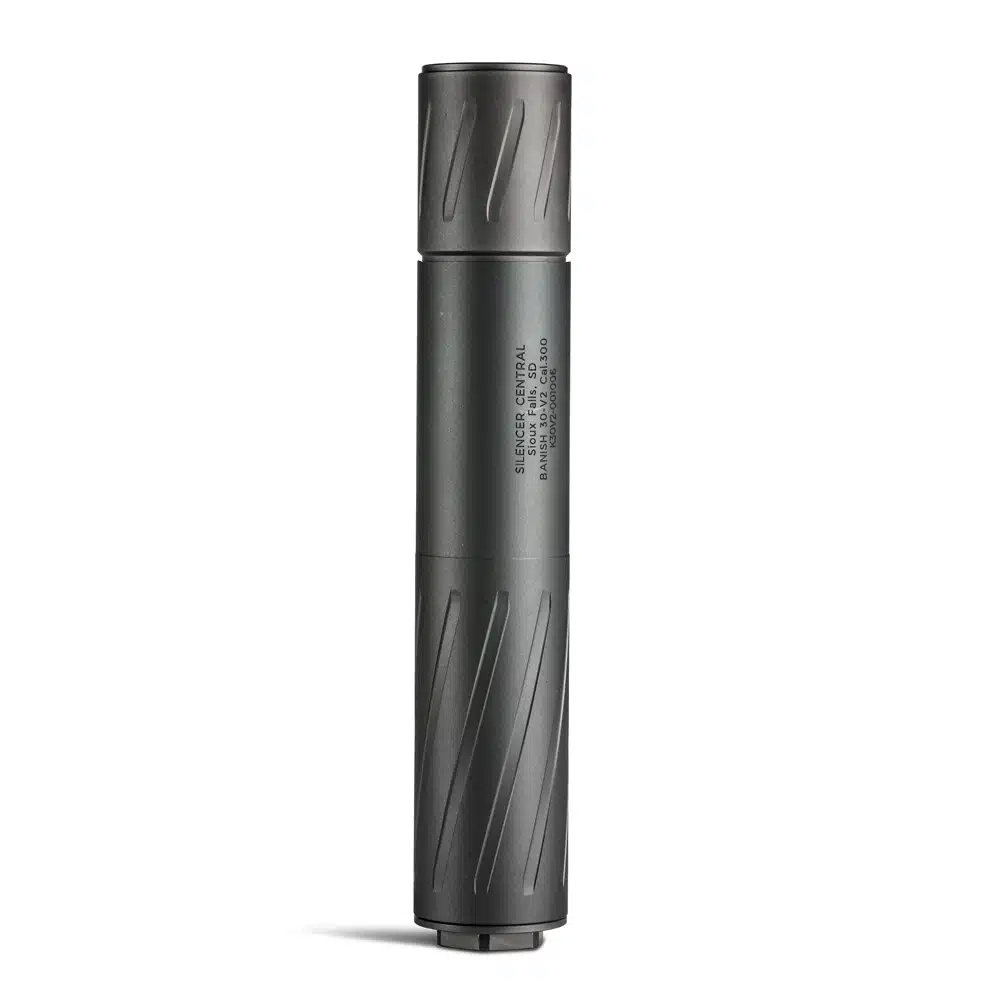
- Multi-caliber. A single BANISH 30-V2 or BANISH 46 will run on everything from rimfire to .300 Win Mag. You don’t need a dedicated can per rifle.
- 100% titanium construction. The whole BANISH line is fully welded titanium. Lighter than steel, doesn’t corrode in humid barn or truck storage, and rated for the thermal cycling of repeated varmint work.
- User-serviceable. No proprietary tools required to break it down for cleaning — important when carbon builds up from regular rimfire or suppressed pistol-caliber work. Other manufacturers require factory service; BANISH you clean at your own bench.
The entry point for most homesteaders is the BANISH Backcountry (lightweight hunting) or the BANISH 30-V2 (full multi-caliber). For shotgun work, the BANISH 12 is the first practical suppressor built for shotguns. For varmint-specific rimfire work, the BANISH 22 or BANISH 45 are the small, quiet, low-cost entry points.
Cost Reality Check (Updated for 2026)
A complete setup for a working homestead in 2026 — now with no tax stamp:
- Entry-level .22 LR can: $300–$500 total (no $200 stamp any more)
- Mid-tier modular multi-caliber can (e.g., BANISH 30-V2): $800–$1,100 total
- Shotgun suppressor (BANISH 12): roughly $1,500 total
- Dealer or shipping fee: typically $0 if you buy from a direct-to-consumer dealer like Silencer Central
Put differently: with the $200 tax stamp eliminated, a first suppressor costs about what a mid-grade trail camera setup used to cost. For a tool you’ll use weekly for decades, it’s not an extravagance — and it was never cheaper than it is right now.
Frequently Asked Questions
Do I need a trust to own a suppressor?
No. Individual ownership on a Form 4 is straightforward. A gun trust is useful if you want multiple people to legally possess the can (a spouse, adult children, business partners) or to simplify inheritance. Most single-owner homesteads don’t need one; most multi-shooter families benefit from one.
Can I travel across state lines with a suppressor?
Yes, if the destination state allows ownership. For ATF-regulated items, you file an ATF Form 5320.20 before traveling to some states (the list has shrunk significantly since 2023); consult your dealer before your first out-of-state trip.
Does a suppressor damage my rifle’s accuracy?
No. A well-fitted can typically improves accuracy by reducing muzzle jump and heat signature variation. Some barrels shift zero by 0.5–1.5 MOA when the can is attached; you re-zero with the can on, then leave it on.
Is a suppressor loud enough that the neighbors will still hear it?
Depends on the caliber and the terrain. A suppressed .22 is audible as a distinct “thump” at 100 yards but rarely identifiable as a rifle shot beyond that. A suppressed .223 is audible farther but doesn’t carry the sharp crack that draws attention. In most rural settings, suppressed rifle work is a non-event for neighbors who would’ve heard an unsuppressed shot from a mile off.
Further Reading
- Silencer Central — direct-to-consumer dealer for BANISH and most major suppressor brands.
- 72-Hour Emergency Kit for Homesteads — hearing protection and dispatch tools belong in the second-shelf kit.
- American Suppressor Association State Map — current state-by-state ownership and hunting legality.

Reader Favorites
Homestead reference charts
Three field guides worth bookmarking — canning times, cellar storage, and safe cooking temps.
| Food | Pressure | Pint |
|---|---|---|
| Green beans | 10 lb | 20m |
| Corn | 10 lb | 55m |
| Tomatoes | water bath | 35m |
USDA/NCHFP processing times & pressures for common foods.
View full chart →| Item | Store | Keeps |
|---|---|---|
| Onions | cool, dry | 9 mo |
| Potatoes | cellar | 4–6 mo |
| Apples | cellar | 6 mo |
How long fruit & veg keep in the cellar, fridge and freezer.
View full chart → Network| Doneness | Target |
|---|---|
| Rare | 125–130°F |
| Medium-rare | 130–135°F |
| Well-done | 160°F+ |
Safe pull temps for steak & burgers, from Popular BBQ.
View full chart →