Dehydrators and Freeze Dryers: A Comparison for Food Preservation
Last updated: August 18, 2026 · Originally published: November 21, 2024
Quick Answer
Dehydrators and freeze dryers both remove water so food stores longer, but they work differently. A dehydrator uses low heat and airflow to pull out roughly 80–90% of a food’s moisture; it is affordable ($50–300), countertop-sized, and great for jerky, dried fruit, and herbs, with a shelf life of about 1–2 years. A freeze dryer freezes food and removes moisture under vacuum (sublimation), taking out ~99% while keeping shape, color, and nutrients nearly intact; it is expensive ($2,000+), bulky, and slow, but sealed freeze-dried food can last 25+ years and even handle full meals, eggs, and dairy. Short version: pick a dehydrator for affordable everyday snacks, a freeze dryer for long-term storage and prepping.
Dehydrator vs freeze dryer: key questions
What is the difference between a dehydrator and a freeze dryer?
A dehydrator uses gentle heat and airflow to dry food (removing ~80–90% of moisture), while a freeze dryer freezes food and removes moisture under vacuum (~99%). Freeze drying preserves texture, color, and shelf life far better but costs much more.
Which lasts longer, dehydrated or freeze-dried food?
Freeze-dried food wins by a wide margin — properly sealed with an oxygen absorber it can last 25 years or more, versus roughly 1–2 years for most dehydrated foods.
Is a freeze dryer worth the cost?
For serious long-term food storage, preppers, or preserving full meals, eggs, and dairy, many find it worthwhile. For occasional jerky, fruit, and herbs, an inexpensive dehydrator is the better value.
Can a dehydrator do everything a freeze dryer can?
No. Dehydrators cannot preserve high-moisture or high-fat foods like full meals, dairy, or eggs well, and dried foods do not rehydrate as completely. Freeze dryers handle a much wider range of foods.
Collecting guns, ammo and a bunch of high-speed gear is the sexy part of being a prepared person. But at the end of the day all that equipment won’t do a thing if you don’t have the nourishment to keep you on your feet. When was the last time you looked in the cupboard and took stock of what you actually have available? Is it stuff that you or your family would actually eat? How healthy is it? I bet if you are like most of the population, you have a bunch of boxed food packed with preservatives and chocked full of things like sodium. Sure, we eat this stuff daily, but have you ever tried to put some effort into preserving different foods? Did you know you can make your own versions of the most popular boxed foods? It’s easy to preserve cheese’s, dairy, potatoes, herbs and spices to make shelf stable things like homemade au gratin potatoes.
You might ask why would I want to preserve my own food? Probably one of the main reasons people get into preserving is that they have a surplus of food especially from gardens. Preserving the food reduces waste from spoilage in that it extends the shelf life of perishable items. Instead of enjoying your crops for only part of the year, food preservation techniques like canning, freezing, and drying allow people to enjoy seasonal fruits and vegetables throughout the year.
After farming and gardening the next most popular reason for preserving food is emergency preparedness. It may not even be a catastrophic even like the end of the world, but simply a snowstorm or other natural disaster. Something that temporarily blocks passage to your neighborhood store. Preserving food ensures that there is a supply of food available in case of emergencies, natural disasters, or other unforeseen circumstances. On top of that, preserving food can help individuals save money by buying items in bulk when they are on sale and storing them for later use.
For myself, I like to think about the convenience factor, and I know the things that I use all the time. It is all about the staple items, like onions, potatoes, rice and other things that I am constantly using. Having them on hand means less time going to the store. Lastly, I do like to think about the health benefits. Preserving food at home allows for control over the ingredients used, helping to reduce additives, preservatives, and excess salt or sugar in the diet.
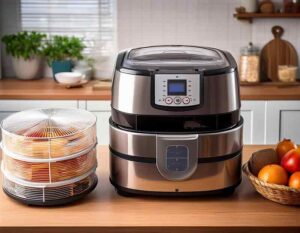
There are a bunch of different ways to preserve foods, but specifically I would like to talk about dehydrators and freeze dryers since they are similar and people can confuse the two since many of the foods that they preserve overlap.
First let’s discuss the process for each in simple terms.
Freeze Dryers: Freeze-drying involves freezing the food at low temperatures and then slowly removing the ice (sublimation) under vacuum conditions. This process preserves the food by removing moisture without causing damage.
Dehydrators: Dehydration works by circulating warm air over the food to remove moisture. This process shrinks and preserves the food by reducing its water content.
See what I mean about being similar, both techniques are removing the liquid from food to preserve them. But each method is completely different in how it achieves the process.
Nutrient Retention
Freeze Dryers: Freeze drying retains more nutrients and preserves the flavor and texture of the food better than dehydration.
Dehydrators: Dehydration can lead to some nutrient loss due to exposure to heat during the drying process.
Shelf Life
Freeze Dryers: Foods preserved using freeze-drying have a longer shelf life compared to foods dehydrated in a dehydrator, as freeze-drying removes more moisture.
Dehydrators: Foods dehydrated in a dehydrator have a shorter shelf life due to the higher moisture content left in the food.
Equipment and Cost
Freeze Dryers: Freeze dryers are more expensive and require specialized equipment, making them a significant investment.
Dehydrators: Dehydrators are more affordable and accessible for home use, as they are generally simpler in design and cost less than freeze dryers.
Texture and Taste
Freeze Dryers: Freeze-dried foods retain their original texture, taste, and appearance better than foods dehydrated in a dehydrator.
Dehydrators: Dehydrated foods can sometimes become leathery or tough, affecting the overall texture and taste.
Time and Complexity
Freeze Dryers: Freeze-drying is a more time-consuming and is a complex process compared to dehydration, requiring more preparation and specialized equipment.
Dehydrators: Dehydration is a simpler and quicker process, making it more convenient for everyday home use. In fact, it is so simple kids can even make things like homemade fruit roll ups.
Pros and Cons of Dehydrators:
Pros:
1. Affordability: Dehydrators are generally more affordable than freeze dryers, making them a cost-effective option for home use.
2. Easy to Use: Dehydrators are user-friendly and require minimal setup. They typically involve slicing food and placing it in the dehydrator.
3. Preserves Nutrients: While some nutrient loss occurs during dehydration, it is less compared to other preservation methods like canning.
4. Versatility: Dehydrators can be used to preserve a wide variety of foods, including fruits, vegetables, herbs, and meats.
Cons:
1. Limited Shelf Life: Dehydrated foods have a shorter shelf life compared to freeze-dried foods due to higher moisture content.
2. Texture Changes: Dehydrated foods may become leathery or tough, which can affect the overall eating experience.
3. Energy Consumption: Dehydrators can be energy-intensive, especially if running for long periods of time.
Pros and Cons of Freeze Dryers:
Pros:
1. Extended Shelf Life: Freeze-dried foods have a significantly longer shelf life compared to dehydrated foods due to the removal of moisture.
2. Retains Nutrients and Flavor: Freeze drying preserves the nutritional content and flavor of the food better than dehydration.
3. Lightweight: Freeze-dried foods are lightweight and easy to transport, making them ideal for camping, hiking, and emergency preparedness.
4. Rehydration: Freeze-dried foods can be rehydrated to a state like fresh food, maintaining taste and texture.
Cons:
1. Cost: Freeze dryers are expensive appliances, making them a significant investment for home use.
2. Complexity: Freeze-drying is a more complex process compared to dehydration, requiring specialized equipment and knowledge.
3. Time-Consuming: Freeze-drying is a time-consuming process, often taking longer than dehydration.
4. Fragility: Freeze-dried foods are more fragile and can be easily crushed, affecting their texture and appearance.
Some of the most commonly dehydrated foods include:
Fruits Vegetables Herbs Meats low in fat to make jerky Nuts and Seeds Grains and Legumes Cheese (can be dehydrated into powder form) Yogurt (can be dehydrated into yogurt drops)
Some of the most common freeze-dried foods include:
Fruits Vegetables Meats Dairy Products (Milk, Cheese, Ice cream, Yogurt) Entrees and Meals – Pasta dishes – Soups – Stews – Casseroles – Breakfast scrambles
In Conclusion:
Dehydrators are a practical and budget-friendly option for preserving a variety of foods, while freeze dryers excel in maintaining the nutritional value and flavor of foods with an extended shelf life. More people preserve foods using a dehydrator because of the ease of use and its low barrier to entry. A decent dehydrator can cost as little as $30 on sale, where a freeze drier set up can start in the $2000.00 range. The choice between the two methods ultimately depends on your priorities, budget, and intended use of the preserved foods. I personally started with the cheaper dehydrator until I saved the money for a freeze dryer. Even after I purchased a freeze dryer, I still use the dehydrator. For example, you really can’t make jerky or fruit leathers with a freeze drier.
I like to think of both units as a one two punch each part of the plan for extending my food plans year-round.
James the “XDMAN” Nicholas Mr. UnPewFessional Himself!
Stocking up for the year? See our home food pantry guide.
Reader Favorites
Homestead reference charts
Three field guides worth bookmarking — canning times, cellar storage, and safe cooking temps.
| Food | Pressure | Pint |
|---|---|---|
| Green beans | 10 lb | 20m |
| Corn | 10 lb | 55m |
| Tomatoes | water bath | 35m |
USDA/NCHFP processing times & pressures for common foods.
View full chart →| Item | Store | Keeps |
|---|---|---|
| Onions | cool, dry | 9 mo |
| Potatoes | cellar | 4–6 mo |
| Apples | cellar | 6 mo |
How long fruit & veg keep in the cellar, fridge and freezer.
View full chart → Network| Doneness | Target |
|---|---|
| Rare | 125–130°F |
| Medium-rare | 130–135°F |
| Well-done | 160°F+ |
Safe pull temps for steak & burgers, from Popular BBQ.
View full chart →