How To Introduce a New Generation to an Established Chicken Flock
Raise your hand if you’ve ever been tempted to turn your backyard into a clucking chicken party! It’s not as feathery (err…I mean crazy) as it sounds. We’ve been at it for over a year now, and let me tell you, our 17 hens are egg-cracking good at their jobs. We’re swimming in the freshest eggs that we gladly share with family and friends. Now hold your horses, we’re not professional farmers. We’re just a bunch of folks who have taken up the hen life, you know, for the clucks and giggles.
Last updated: March 18, 2024 · Originally published March 17, 2024
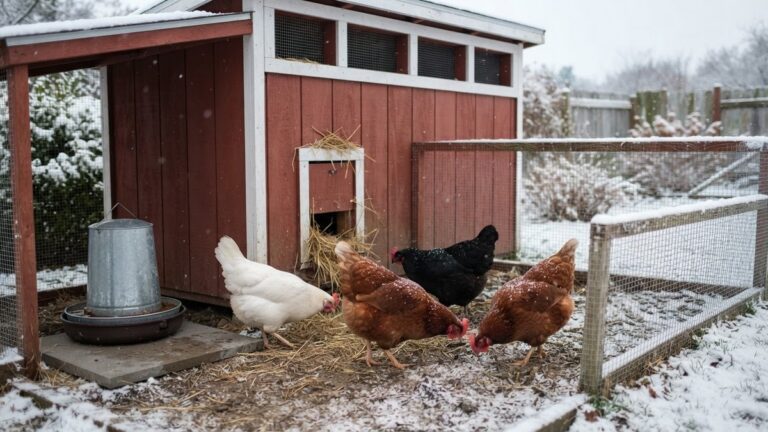
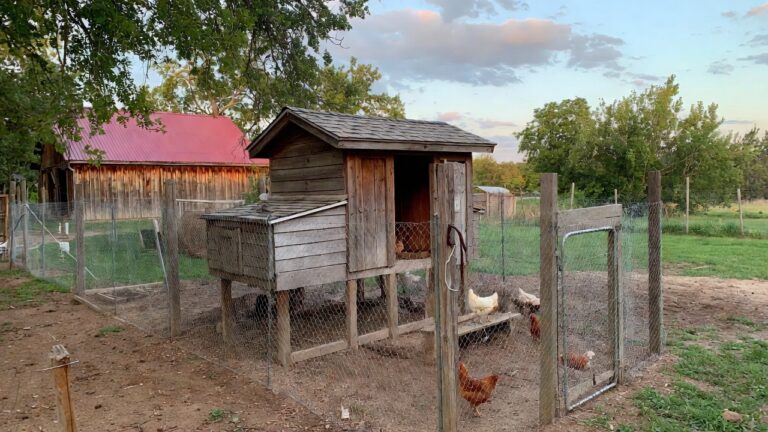
For our chicken gang, we have a spacious coop and run—the hen equivalent of a five-star hotel. But recently, we’ve added four new chicks (pullets, to be precise) to our feathery family. Every year, we plan to add to our brood because, let’s face it, our layers won’t keep laying forever, and we want our eggcellent adventure to continue.
In case you didn’t know, hens are like high school girls—they stick to their cliques. There’s always a queen bee (or should I say queen hen?) and hens lower down the pecking order often pick on the newbies. Yep, it gets as ugly as a feather-duster fight with casualties, so introducing new hens needs to be a carefully-staged drama.
We started off by giving our newbies some space away from the big girls, which also helped us to keep a beady eye on them. The following month, we had a new coop and run constructed next to the old brood’s territory. Now, the oldies can check out the newcomers without any feathers being ruffled, and newbie hens can learn the pecking order from a safe distance. After a few weeks of this poultry soap opera, we plan to slowly start integrating the flocks.
Now, housing these newbies temporarily was a bit of a head-scratcher. Being a hen-parent can be expensive—who knew?! But here’s the scoop on the coop: March is when flock-fans like us flock to “Tractor Supply” for their great sales. I snagged a perfect 6 chicken capacity coop and run for a smooth 299.99. Some of you might be squawking at the idea of spending that much, but hear me out.
We’re planning to expand our feathered family each year, which makes the coop a solid investment. Plus, if you’ve ever signed up for the chicken life, you know there are instances where hens need temporary homes and you need to be prepared. As for us, our extra coop goes into storage, waiting to be hatched (err…I mean brought) out again the next year.
If you’re someone with space, patience, and a love for fresh eggs, I’d say, go for it. Chicken-keeping is more reward than peck. The first egg will give you a high like no other. To top it off, they’re as easy to raise as dogs. All they need is a safe coop, some shade and sun, food, and water. And treats (note: they love fruits and veggies). The bonus? Every one of them has a personality, and you’ll find yourself having the most eggciting conversations with your feathered friends.
James Nicholas
A three-way tie: 30% each keep root crops in the fridge, in a cellar, basement or sand, or left in the garden.
Reader Favorites
Homestead reference charts
Three field guides worth bookmarking — canning times, cellar storage, and safe cooking temps.
| Food | Pressure | Pint |
|---|---|---|
| Green beans | 10 lb | 20m |
| Corn | 10 lb | 55m |
| Tomatoes | water bath | 35m |
USDA/NCHFP processing times & pressures for common foods.
View full chart →| Item | Store | Keeps |
|---|---|---|
| Onions | cool, dry | 9 mo |
| Potatoes | cellar | 4–6 mo |
| Apples | cellar | 6 mo |
How long fruit & veg keep in the cellar, fridge and freezer.
View full chart → Network| Doneness | Target |
|---|---|
| Rare | 125–130°F |
| Medium-rare | 130–135°F |
| Well-done | 160°F+ |
Safe pull temps for steak & burgers, from Popular BBQ.
View full chart →