New World Screwworm: How to Protect Your Homestead Livestock in 2026
New World screwworm is a real risk to pastured livestock, and daily wound checks on every animal are still the most effective defense available.
Last updated: October 12, 2026 · Originally published September 25, 2026
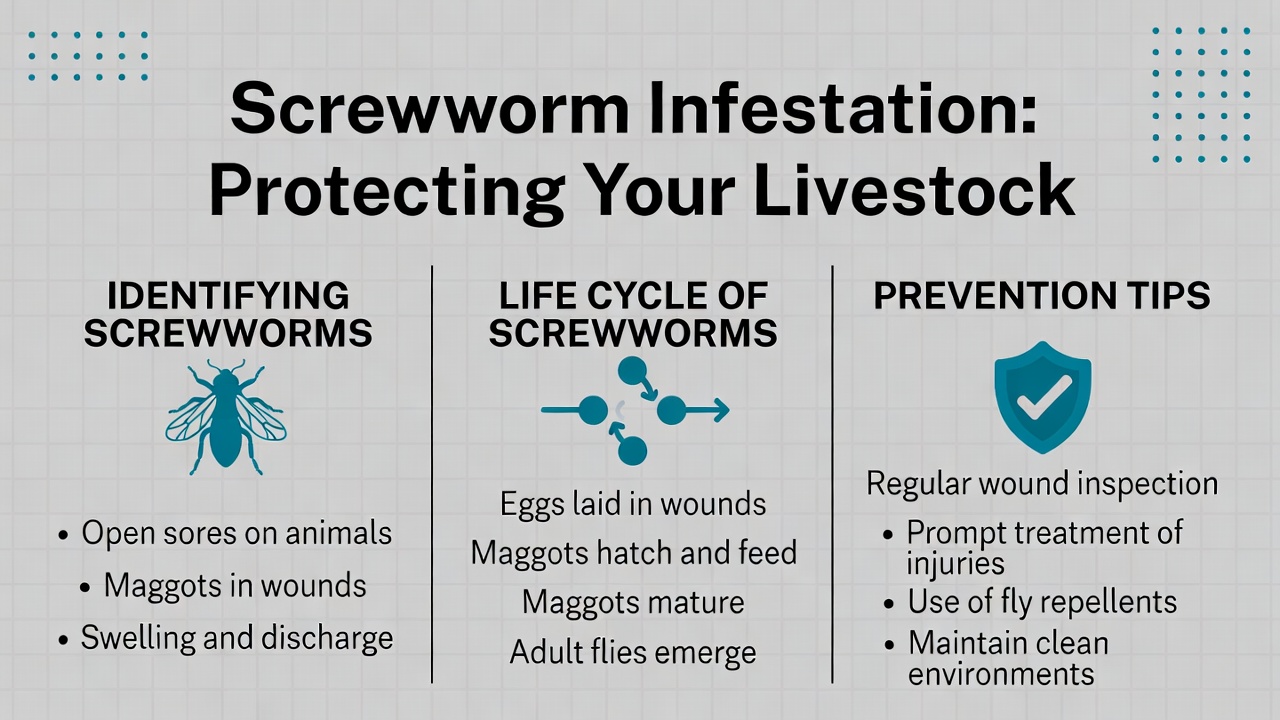
Updated September 8, 2026. Is the New World screwworm a real threat to your livestock right now? Yes. The USDA confirmed the first domestic case in June 2026, and federal animal-health officials have logged roughly 48 cases across the southern United States since, with the outbreak still spreading into new counties as of early September. For anyone running cattle, goats, sheep, or poultry, this is the flock-and-herd health story to keep watching.
The New World screwworm is a parasitic fly whose larvae feed on the living flesh of warm-blooded animals. It was declared eradicated from the United States in 1966. Its return to U.S. soil in 2026 has closed the southern livestock border and put every homesteader with animals on notice. Here is what happened, what the parasite does, and the daily routine that keeps your animals off the case map. I will keep it practical.
What the New World screwworm is and why it matters
Let’s start with the parasite itself. The New World screwworm (Cochliomyia hominivorax) is a blowfly. Unlike common maggots that feed on dead tissue, screwworm larvae burrow into living wounds. A female fly lays 200 to 300 eggs at the edge of an open cut, a tick bite, or a fresh navel. The larvae hatch within hours and screw themselves down into the flesh, which is where the name comes from.
Any warm-blooded animal is a host. Cattle, horses, goats, sheep, pigs, dogs, cats, poultry, and wildlife are all vulnerable. People can be infested too, though human cases are rare. The wound draws more flies, the infestation grows, and an untreated animal can die within one to two weeks of the eggs hatching.
“The larvae basically eat the animal from the outside in,” said Dr. Jennifer Schleining, a clinical professor and head of the Department of Large Animal Clinical Sciences at Texas A&M and a member of the AgriLife Research New World Screwworm Task Force, in an October 2025 interview. “It can happen very fast if you don’t catch it early.” Feral hogs and wildlife carry the parasite too, which is why managing predators and feral wildlife on the land around your animals is part of the same job.
The United States and Panama spent decades pushing this parasite south of the Darién Gap using sterile-fly releases. That barrier broke down through Central America and Mexico across 2024 and 2025. On June 3, 2026, the USDA confirmed screwworm in a three-week-old calf in Zavala County, Texas, with larvae in the animal’s umbilical area. The calf recovered, but it was the first domestic case in sixty years.


Where the outbreak stands
Now, the current picture. As of September 5, 2026, roughly 48 known cases have been confirmed, tracked on USDA’s Animal and Plant Health Inspection Service (APHIS) public dashboard, updated every business day. Cattle make up most of the cases, with sheep, goats and dogs also affected. What has changed since midsummer: cases that were concentrated in south-central and western Texas counties through mid-July have since spread into new counties, including Val Verde (August) and Crockett (August 31), plus a case confirmed in New Mexico. Numbers move week to week, so check the dashboard for the current count.
Two federal actions frame the response. All southern ports of entry remain closed to livestock trade, a shutdown that began in July 2025 to slow the parasite’s march north. And USDA is scaling sterile-fly production toward roughly 500 million flies per week. Sterile males mate with wild females, the eggs never hatch, and the population collapses over successive generations. It worked in the twentieth century, and it is the backbone of the plan now.
APHIS rates the current risk to people and the food supply as very low. This is a livestock-health emergency, not a food-safety one. Beef, milk, and eggs from healthy animals are unaffected. This is the second livestock-disease story to watch this year, alongside the bird flu threat to backyard flocks — and both reward the same daily-observation habit.
How to tell if an animal is infested
Screwworm infestations do not look like the maggots you might find on a carcass. You will not see a writhing mass on the surface (that is the part that fools people). Watch the wound itself.
- Small white dots deep in a wound. The larvae bury head-down, so you see the pale tips of their bodies, not whole maggots.
- A wound that grows rather than heals. Screwworm cuts enlarge and deepen over days.
- A foul, distinct odor. Infested wounds smell rotten even when the surrounding animal looks healthy.
- Behavior changes. Restlessness, lying apart from the herd, off feed, and weight loss all show up as the infestation deepens.
- Bloody discharge draining from the site.
Newborns are the highest-risk group on any homestead. The healing navel is exactly the kind of moist, open site a female fly hunts for. Check every new calf, kid, lamb, or foal daily for the first week of life.
How to protect your livestock: a daily routine
Remember, there is no vaccine. Protection comes from vigilance, wound management, and fly control, and USDA’s official prevention guidance centers on the same routine. Build these steps into chores and you cut your risk sharply.
- Inspect animals every day. Walk the herd and look at every animal, paying attention to any fresh wound, tick bite, or surgical site. Daily eyes on stock is the single best defense.
- Treat newborn navels at birth. Dip or spray the umbilical cord of every newborn with an approved antiseptic or larvicide, and check it daily until it dries and closes.
- Clean and dress every wound. Flush cuts with clean water, remove debris, and apply an approved wound treatment. An open wound is an invitation; a dressed one is not.
- Time your husbandry. Schedule castration, dehorning, branding, and docking for cooler months when fly activity is lowest, and avoid creating fresh wounds during a local outbreak.
- Run fly control. Pour-ons, pyrethrin sprays, and fly tags reduce the adult population around your animals. Keep manure managed and standing water drained.
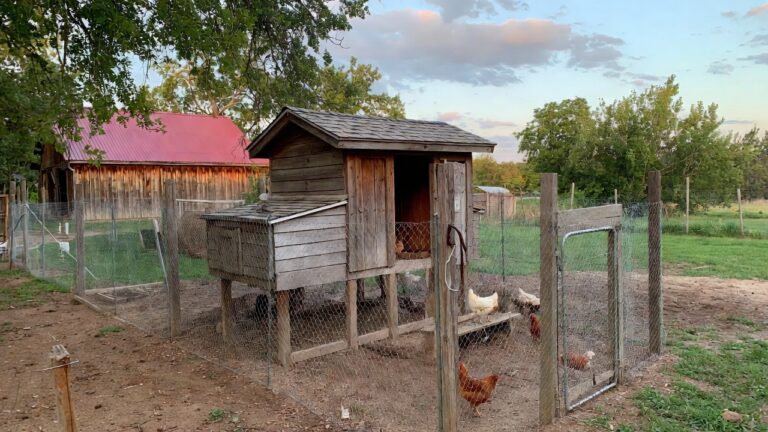
- Keep facilities in repair. A nail head, a splintered board, or a snag on fence wire creates the wounds screwworm flies exploit. The same habit that goes into predator-proofing your coop and pens keeps injury hazards off your property.
The threats to a homestead do not line up one at a time. Night predators pressure the flock while flies work the pastures by day, so the tools that stop coyotes after dark and the wound checks that stop screwworm are two halves of the same routine.

What to do if you suspect screwworm
New World screwworm is a federally reportable disease. If you see white dots in a wound, an enlarging cut, or that unmistakable odor, you are required to report it, and prompt reporting is what triggers the surveillance and sterile-fly response that protects your neighbors.
Call your veterinarian and your state animal-health official, or contact USDA APHIS directly at 1-866-536-7593. Do not move the animal off your property. If you can, collect a sample of the larvae in a sealed container with rubbing alcohol so a lab can confirm the identification. Isolate the affected animal, treat the wound under veterinary guidance, and keep the site covered from flies while you wait for direction.
Quick action matters. On a working homestead, the difference between a treated navel and a lost calf is often a single daily walk through the pen.
Frequently asked questions
Can New World screwworm infect humans?
Yes, but human cases are rare and the current risk is very low. Screwworm larvae can infest open wounds on people just as they do on animals. Anyone working closely with infested livestock should keep their own cuts clean and covered, and see a doctor if a wound develops white larvae or an unusual odor.
Is meat or milk from my animals still safe?
Yes. USDA classifies the outbreak as an animal-health issue, not a food-safety one. Meat, milk, and eggs from healthy animals remain safe. The concern is the welfare and survival of infested livestock, not contamination of the food supply.
Which animals on a homestead are most at risk?
Any animal with an open wound is at risk, but newborns top the list because their healing navels attract egg-laying flies. After that, watch any animal with a fresh cut, a tick or bite wound, or a recent surgical site such as a castration or dehorning.
How do I protect a new litter or newborn stock?
Treat the navel at birth with an approved antiseptic or larvicide, and inspect it daily until it fully dries and closes. Keep birthing areas clean, time births for cooler seasons where you can, and run fly control around your maternity pens.
Will the sterile-fly program end the outbreak?
It is the proven tool that eradicated screwworm from the U.S. before, and USDA is scaling production toward roughly 500 million sterile flies per week. Eradication takes successive generations, so the program works over months, not days. Your daily prevention is what protects your animals in the meantime.
Final Thoughts
Screwworm was a solved problem for sixty years, and it will be again. Until the sterile flies win that fight, the border between a healthy herd and a case on the map runs right through your morning chores.


Reader Favorites
Homestead reference charts
Three field guides worth bookmarking — canning times, cellar storage, and safe cooking temps.
| Food | Pressure | Pint |
|---|---|---|
| Green beans | 10 lb | 20m |
| Corn | 10 lb | 55m |
| Tomatoes | water bath | 35m |
USDA/NCHFP processing times & pressures for common foods.
View full chart →| Item | Store | Keeps |
|---|---|---|
| Onions | cool, dry | 9 mo |
| Potatoes | cellar | 4–6 mo |
| Apples | cellar | 6 mo |
How long fruit & veg keep in the cellar, fridge and freezer.
View full chart → Network| Doneness | Target |
|---|---|
| Rare | 125–130°F |
| Medium-rare | 130–135°F |
| Well-done | 160°F+ |
Safe pull temps for steak & burgers, from Popular BBQ.
View full chart →