Backyard Flock Biosecurity: Why the Case Count Is the Wrong Alarm

The USDA case count is the wrong alarm to set your fall by. It reports what has already been confirmed, and confirmation runs weeks behind the birds. Backyard flock biosecurity runs on a different clock — the waterfowl migration calendar — and that calendar has already turned.
Last updated: October 10, 2026 · Originally published September 22, 2026
Backyard flock biosecurity is the set of routines that keep wild-bird contamination out of a small poultry operation. It covers four things: covered feed and water, a covered or shortened run, one dedicated pair of boots, and a 30-day quarantine on every new bird. It matters most in September and October, when migrating ducks and geese carry H5N1 south along four flyways.
Updated September 4, 2026.
What USDA reported in late August
Federal reporting restarted on August 28, 2026, after close to 30 days without an update from USDA’s Animal and Plant Health Inspection Service. When it restarted, the numbers were not small.
South Dakota reported a commercial breeding operation in Edmunds County with 29,700 birds affected, plus a second site in Brule County at 2,800 birds. Idaho confirmed two more outbreaks, in Ada and Canyon counties. Across the country, APHIS logged outbreaks in two commercial and three backyard flocks over the prior 30 days, according to trade reporting on the resumed USDA updates.
Three dairy herds were confirmed in the same window — two in Texas, one in Utah. Cattle detections are down hard year over year: 85 herds so far in 2026, against 171 in all of 2025 and 917 in 2024.
Now, read that list again and notice what it does not contain. It does not contain a date on which any of those birds were infected. It contains the dates they were confirmed.

Why the case count lags your real risk
A confirmation is the end of a chain, not the start. A bird gets sick. An owner notices. A sample goes out. A lab runs it. A state reports it. APHIS posts it.
Each link takes days. The near-30-day federal reporting gap this summer added a second delay on top of the first. By the time a county shows up on the dashboard, the virus has been in that watershed for a while.
APHIS states the seasonal pattern plainly on its own detections page. Detections run higher in fall and spring, the agency writes, because wild birds spread the virus as they migrate to their seasonal homes.
That sentence is the whole argument. The agency is telling you the driver is migration. Migration is a calendar you can read in advance. The case count is a receipt you read afterward.

The fall migration calendar is the real trigger
Waterfowl move south on a schedule that barely changes year to year. Early-season teal move first, in late August and early September. Mallards, pintails, and gadwall follow through October. Geese push south behind the first hard cold fronts.
Ducks carry avian influenza without looking sick. They drop it in water. Your pond, your creek, the low spot in the pasture that holds rain for three days — those are the contact points, not a neighbor’s driveway.
Public land concentrates the problem further. Refuge wetlands hold enormous bird numbers through fall. That is one reason waterfowl management on national wildlife refuges stays a live subject for hunters and landowners alike.
So set your routines by geography, not by headlines. I am in Birmingham, Alabama, under the Mississippi Flyway, and if you sit near a flyway stopover like that, your risk window opened weeks ago.
Your September checklist
Let’s get practical. None of this is expensive (most of it is a Saturday).
Fix the water first
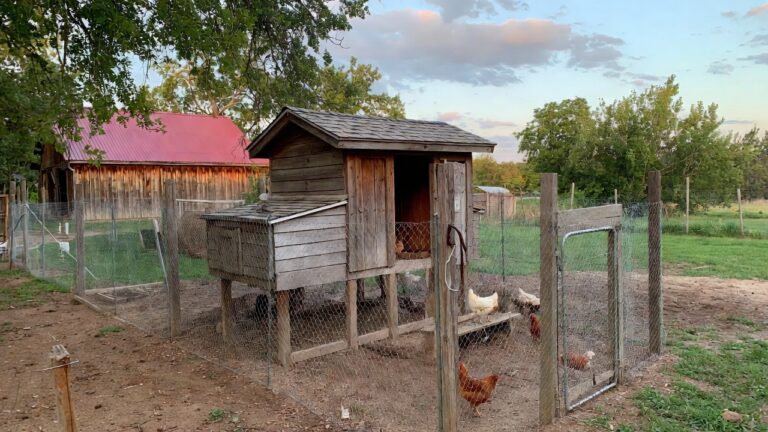
Open water is the single largest exposure. Move waterers under the coop overhang or into the run where wild birds cannot land on them.
Dump and refill daily rather than topping off. If your birds drink from a creek or a stock pond, fence that access for the season and haul water instead.
Feed, and what it attracts
Scattered grain draws sparrows, starlings, and geese onto the same ground your hens scratch. Feed inside the coop or under cover, and pick up what is left at dusk.
Store bagged feed in sealed metal containers. Rodents move virus on their feet the same way boots do.
Cover the run, or shrink it
A solid roof over the run ends the droppings problem outright. Where a roof is not practical, aviary netting over the top does most of the work for a fraction of the cost.
If neither is possible, shorten the run for six weeks and give the birds a covered ground area instead. The same hardware cloth and buried apron that keeps raccoons out will also keep the run tight when you close it down.

One pair of boots, one direction
Keep a dedicated pair of boots at the coop door and wear nothing else inside the run. Do not walk from the duck pond to the coop, and do not walk from the coop to a neighbor’s flock.
Work clean to dirty: young birds first, then the laying flock, then anything quarantined. A boot tray with a disinfectant rated for avian influenza sits by the door and gets changed weekly.
Quarantine every new bird for 30 days
Swap meets and auctions in fall are how virus travels between counties. Any new bird — bought, gifted, or returned from a show — stays 30 feet from the main flock for 30 days.
Feed and water the quarantine pen last. USDA’s Defend the Flock program covers the same ground in its avian influenza guidance for small owners. Read it before you buy anything this fall.
Write down what normal looks like
Log daily egg counts and water consumption on a clipboard by the door. Water intake drops before birds look sick.
A three-day slide in consumption is the earliest signal most small owners will get. My year-round biosecurity basics cover the recordkeeping side in more detail.
Signs of H5N1 in a small flock
Highly pathogenic avian influenza moves fast. Birds can go from mild signs to death inside a day.
- Sudden death in several birds with no prior illness
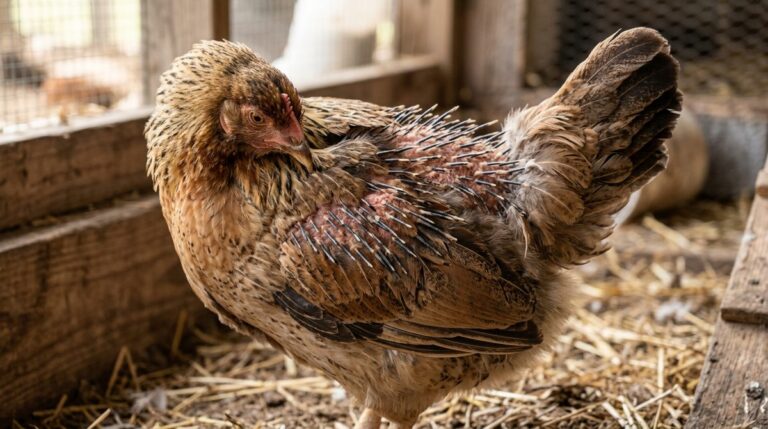
- Purple discoloration of the comb, wattles, and legs
- Swelling of the head, eyelids, and hocks
- Nasal discharge, coughing, sneezing, or gasping
- Sharp drop in egg production, or soft-shelled and misshapen eggs
- Stumbling, twisting of the neck, or refusal to move
Any two of those together, on the same day, in more than one bird, is a call — not a wait-and-see. The pattern of how the virus moves through a small flock is why speed matters more than certainty here.
What to do if you suspect bird flu
- Stop moving. No birds, eggs, manure, or equipment leaves the property.
- Call your state veterinarian or USDA’s toll-free line at 1-866-536-7593. Reporting is free and testing costs you nothing.
- Isolate the affected pen and change boots and clothes before you touch anything else.
- Bag mortality and hold it cold until an official tells you otherwise. Do not compost it.
- Keep the log. Dates, counts, and water intake are what an investigator will ask for first.
Remember, reporting is not an admission that you did something wrong. Small flocks near flyways get hit for reasons that have nothing to do with husbandry.
What these routines cannot do
It cannot make a flock immune. There is no approved vaccine for backyard poultry in the United States, and none of the supplements marketed for “flock immunity” has an approved claim against H5N1.
What routines do is cut exposure. Fewer contacts, cleaner water, and fewer shared surfaces mean fewer chances for the virus to reach your birds. That matters most during the eight weeks when the sky is full of carriers.
Cooking also does not enter into it the way people assume. Eggs and meat handled and cooked normally are not the risk pathway for a small owner; contact with sick birds is. If you are already thinking about the winter pantry, my canning safety fundamentals address that side separately.
How I read the dashboard
Two notes on method, because the numbers above deserve them. The commercial and backyard figures come from the APHIS confirmations page and from trade reporting published August 28, 2026, on the resumed federal updates.
Confirmation dates are not infection dates. A reporting gap also compresses several weeks of activity into one publication day, which makes any 30-day rolling figure a floor rather than a ceiling. I have not independently verified individual county detections beyond those published sources.
Frequently asked questions
Is it safe to keep chickens during a bird flu outbreak?
Yes, with routines in place. The risk to a covered, confined flock with dedicated boots and clean water is far lower than to a flock ranging on ground that waterfowl use. Most backyard detections trace back to shared water, spilled feed, or a new bird added without quarantine.
How long should I keep my chickens confined in fall?
Plan on six to eight weeks, roughly from the first teal movement in early September through the end of the main duck migration in your flyway. Confinement is not permanent. Reopen the run once local waterfowl numbers drop and your state reports no new detections nearby.
Can bird flu spread to people from a backyard flock?
Human cases are rare and have occurred almost entirely among people with direct, sustained contact with infected birds or contaminated milk. Federal health agencies still rate the general public risk as low. Gloves, a mask while cleaning the coop, and handwashing cover most of the exposure a small owner faces.
Do I need to report a single dead chicken?
One bird lost to a predator or to age is not a report. Several sudden deaths in one to two days, especially with swelling or purple combs, is. When you are unsure, call the state veterinarian anyway — testing is free, and a negative result costs you one phone call.
What disinfectant works against avian influenza?
Use a product with an EPA registration listing avian influenza, applied to surfaces that have been cleaned first. Organic matter blocks disinfectants, so scrape and wash before you spray. Boot trays need fresh solution weekly, and more often in wet weather.
Final Thoughts
Basically, the window is open now. Cover the water this week. Pull the feed under a roof and hang the netting. Set a second pair of boots by the coop door before the first cold front moves birds through your county.
The dashboard will catch up in October. By then the geese will have already told you what it says.


Reader Favorites
Homestead reference charts
Three field guides worth bookmarking — canning times, cellar storage, and safe cooking temps.
| Food | Pressure | Pint |
|---|---|---|
| Green beans | 10 lb | 20m |
| Corn | 10 lb | 55m |
| Tomatoes | water bath | 35m |
USDA/NCHFP processing times & pressures for common foods.
View full chart →| Item | Store | Keeps |
|---|---|---|
| Onions | cool, dry | 9 mo |
| Potatoes | cellar | 4–6 mo |
| Apples | cellar | 6 mo |
How long fruit & veg keep in the cellar, fridge and freezer.
View full chart → Network| Doneness | Target |
|---|---|
| Rare | 125–130°F |
| Medium-rare | 130–135°F |
| Well-done | 160°F+ |
Safe pull temps for steak & burgers, from Popular BBQ.
View full chart →