What to Plant in November: Zone-by-Zone
What to plant in November depends on your zone: garlic and bulbs up north, then cabbage, onions and leafy greens in zones 8 to 10.
Originally published: November 4, 2026
What to plant in November comes down to one number: how many growing days you have left before a hard freeze or frozen ground shuts the garden down. In zones 3 through 7 that list is short, mostly spring bulbs and garlic where the local window is still open, while the Gulf South and Florida are in the middle of their best cool-season planting of the year. Every date below is an average from a university extension calendar, not a promise, so check your own first-frost date and the local forecast before you put a seed in the ground.
Safety note. Planting windows here come from extension calendars built on long-term average frost dates, and an early hard freeze can arrive ahead of them. Check your local National Weather Service forecast before you plant or cover, and read the label on any fertilizer, lime or pesticide before you use it.
So which camp are you in? If your ground freezes hard early, November is for tucking garlic and bulbs in and putting the beds to bed. If your first frost is still weeks away (or barely shows up at all), November is planting season, and in South Florida it is tomato season.
November Planting at a Glance
- Zones 3 to 5: garlic goes in one to two weeks after the first killing frost, under 3 to 4 inches of straw or leaves (University of Minnesota).
- Zones 6 and 7: Virginia’s zone tables list no vegetable planting in November; garlic closes October 1 in zone 6 and October 30 in zone 7.
- Zone 8: garlic through November 15 in Virginia and through November in north Louisiana, plus cabbage, kohlrabi, turnips and onions.
- Zones 9 and 10: lettuce, English peas and the full cool-season list, and in South Florida, tomatoes, peppers and beans too.
- Too late? Cereal rye germinates at temperatures as low as 34°F, so a cover crop still fits where nothing else will.

What to Plant in November, by Zone
| Zone | What you can still plant | What to do instead | First-frost check | Source |
|---|---|---|---|---|
| Zones 3 to 5 | Garlic, one to two weeks after the first killing frost; spring bulbs, ideally about four weeks before the ground freezes | Mulch garlic with 3 to 4 inches of leaves or straw; plan next year’s beds | Rules run off frost, not a date: look up yours in the frost date tool | University of Minnesota; Illinois Extension |
| Zone 6 | No vegetable on Virginia’s zone 6 fall table runs into November (garlic closes October 1); spring bulbs if the ground is not frozen | Mulch, rake leaves into beds or compost, take a soil sample | Average first fall frost October 5 to 15 (6a and 6b) | Virginia Cooperative Extension 426-331, Tables 1 and 2 |
| Zone 7 | No vegetable on Virginia’s zone 7 fall table runs into November (garlic closes October 30); spring bulbs if the ground is not frozen | Row cover or a cold frame stretches fall planting two to four weeks; mulch and soil prep | Average first fall frost October 15 to 25 (7a), October 25 to November 5 (7b) | Virginia Cooperative Extension 426-331, Tables 1 and 3 |
| Zone 8 | Garlic (to November 15 in Virginia, all month in north Louisiana); cabbage, Brussels sprouts, kohlrabi, turnips, celery, arugula, green onions; early in the month, beets, collards, kale, spinach, onion transplants, shallots | Sow cereal rye on open beds; plant fruit trees, blackberries and blueberries | Average first fall frost November 1 to 15 (8a), November 15 to 25 (8b) in Virginia | VCE 426-331, Table 4; LSU AgCenter P3941-A (north Louisiana) |
| Zone 9 | Everything in the zone 8 row, plus lettuce, endive, English peas and fava beans all month and carrots early in the month (south Louisiana); Irish potatoes from November on (Central Florida) | Keep row cover handy for a cold snap; sow cereal rye on open beds | North Florida (zones 8 and 9) still gets frost; check your ZIP for your first-frost date | LSU AgCenter P3941-A (south Louisiana); UF/IFAS VH021 |
| Zone 10 | The full cool-season list plus warm-season crops in South Florida: tomatoes, peppers, eggplant, bush and pole beans, cucumbers, summer squash, sweet corn | Plant in succession; use the UF ZIP code planting list for your spot | Frost is occasional in Central Florida (zones 9 and 10) and rare in South Florida (zones 10 and 11) | UF/IFAS VH021, Table 1; UF/IFAS Gardening Solutions |
Each row comes from an extension service that names the zone or region itself: Virginia’s guide prints separate tables for zones 6a through 8b, LSU labels north Louisiana zone 8 and south Louisiana zone 9, and UF/IFAS places North, Central and South Florida in zones 8 and 9, 9 and 10, and 10 and 11. “Early in the month” means the chart’s November 1 to 14 half. Find your zone on the 2023 USDA Plant Hardiness Zone Map, then your first-frost date in our frost dates by ZIP code tool.
Zone tells you how cold your winter gets, not when it starts. The USDA map is built on the average annual extreme minimum winter temperature, in 10-degree zones and 5-degree half zones, so two gardens in zone 7 can have first frosts weeks apart. Remember, the first-frost date is what decides November, and the zone only gets you to the right row.
Can You Still Plant It? Count Back From Frost
The University of Georgia gives the cleanest rule I know for this question: find your frost date, then count back the crop’s days to maturity plus 18 days for harvest. Their own example is snap beans that mature in 55 days with a November 15 frost, which means planting on or before September 3.

Our frost date tool does the first step for you. It reads NOAA’s 1991 to 2020 climate normals at the 32°F threshold and gives both the average first fall freeze and a safer early date, and it lists a latest fall sowing date for each crop. Treat that last date as the outer edge of the window, not the target. If the count-back lands in October, the crop belongs on next August’s list instead, and our guide to what to plant in August for a fall harvest picks it up there.

Garlic and Spring Bulbs Up North
Garlic is the closest thing to a national November crop, but the window shifts by hundreds of miles. Minnesota plants it one to two weeks after the first killing frost, and the University of Minnesota says that in the northern part of the state you can still plant late if you give it a thick layer of straw. Kentucky’s extension service plants garlic “mostly in October through early November.” Central North Carolina’s calendar runs from September 15 to November 30, and Louisiana’s chart runs from October through November in both halves of the state.

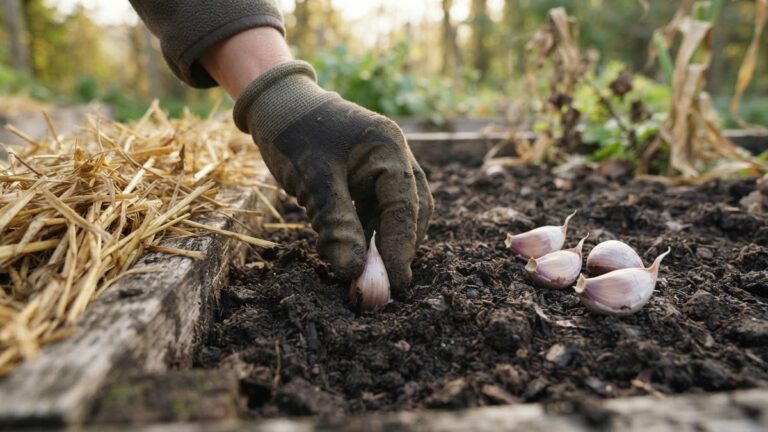
Virginia is stricter. Its tables close garlic on October 1 in zone 6, October 30 in zone 7 and November 15 in zone 8. So if you garden in zone 6 or 7 and the cloves are still in the bag, November planting is a Hail Mary by Virginia’s numbers, and the better bet is your own state’s calendar. Wherever you plant, Minnesota sets the cloves pointed side up with the base two to three inches below the surface, then covers the bed with three to four inches of leaf or straw mulch.
One more Minnesota line worth taping to the seed shelf: “Avoid planting cloves from garlic purchased at the grocery store.” That garlic is mostly softneck, and Minnesota says it does not do well in their conditions.
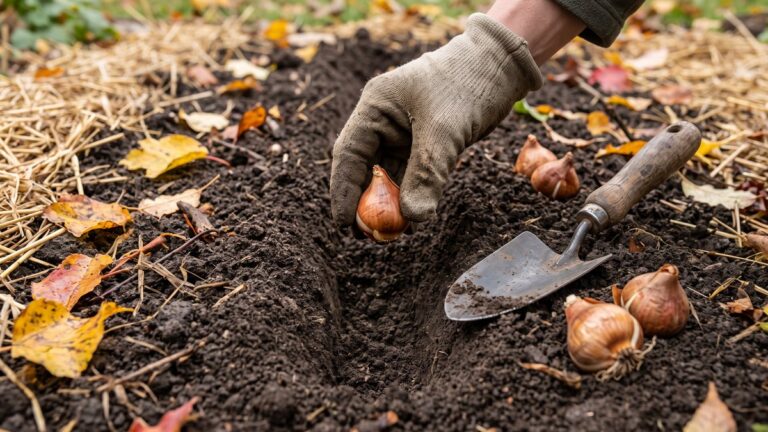
Spring bulbs follow a similar clock. Illinois Extension puts the ideal planting time at about four weeks BEFORE the ground freezes, so the bulb can grow roots ahead of winter, and plants tulips and daffodils about 8 inches deep, measured from the bottom of the bulb. Iowa State’s extension service says tulips and other spring bulbs can be planted as late as December if the soil is not frozen, so if your ground is still workable in November, the bulbs can still go in, just later than ideal.
Too Late to Plant? Sow Rye and Mulch
An empty bed in November is not a lost bed. SARE’s cover crop handbook calls cereal rye “the hardiest of cereals” and says it “can be seeded later in fall than other cover crops,” germinating at temperatures as low as 34°F. Their recommended window is late summer to midfall in zones 3 to 7 and fall to midwinter in zones 8 and warmer, and they note it “can be planted in November or December in much of the country.” Our piece on cover crops and their uses covers what each one does for the soil.
Missed even that? North Carolina’s Buncombe County extension office suggests an inch or two of clean straw over the garden if you missed the window for sowing cover crops. Leaves count too, and the University of Georgia’s November list starts with spreading manure, rotted sawdust and leaves over the garden and working them in. Our guide to winter gardening goes further into mulch, cold frames and the crops that ride out the cold.
The Gulf South in November: Zones 8 and 9
This is where November earns its keep. LSU AgCenter’s planting chart shows north Louisiana (zone 8) planting garlic all month, along with cabbage, Brussels sprouts, kohlrabi, turnips, celery, arugula and green onion transplants. Beets, collards, kale, spinach, bulb onion transplants and shallots are still on the chart in the first half of the month, and strawberries, fruit trees, blackberries and blueberries go in as well.
South Louisiana (zone 9) gets everything north Louisiana does, then adds lettuce, endive and escarole, English peas and fava beans for the whole month, plus carrots through mid-November. Virginia’s zone 8 table is tighter, with garlic to November 15 and fall spinach closing November 1, which is a good reminder that a zone line does not erase local frost dates.
Florida in November, North to South
Florida runs three calendars. UF/IFAS splits the state at State Road 40 and State Road 70: North Florida covers zones 8 and 9, Central Florida zones 9 and 10, and South Florida zones 10 and 11. In November, North Florida can plant arugula, beets, broccoli, Brussels sprouts, cabbage, carrots, collards, kale, mustard, bulbing and bunching onions, radishes, spinach, Swiss chard and strawberries.
Central Florida opens its English pea and Irish potato windows in November (both run November to February) and keeps lettuce, celery and cauliflower going. South Florida is the outlier: tomatoes, peppers and eggplant (August to February), beans (September to April), cucumbers, summer squash and sweet corn are all in season alongside the cool crops. UF also runs a planting list by ZIP code at floridafresh.ifas.ufl.edu; enter your ZIP and it generates the vegetables for that time of year.
Stretching the Window With Covers
Can a cover buy you time? Yes, within limits. Virginia’s guide says row cover fabric and cold frames may extend the planting and harvest window by two to four weeks in spring and fall, and North Carolina’s central calendar says spun covers can extend the garden longer into fall. Buncombe County’s November advice for leafy greens is short and to the point: cover them with polyspun fabric to protect them from cold temperatures.
What Not to Plant in November
Warm-season crops are the big no outside South Florida. UF/IFAS puts it plainly: “Warm season vegetables such as tomatoes and peppers are damaged or killed by frosts and freezes.” Virginia marks sweet corn, okra, peppers, eggplant, pumpkins, winter squash and sweet potatoes “not recommended” for fall planting in every zone from 6a through 8b. If a crop cannot take a fall planting date in Virginia’s warmest zone, it has no business going in the ground in November.
November Jobs for Next Year’s Garden
The University of Georgia’s November and December list is all about next season. Take a soil sample to allow plenty of time to get the report back, and apply lime in the fall, because their circular says lime applied then will do more good the following year than if it goes on in spring right before planting. Georgia recommends dolomitic limestone, which supplies both calcium and magnesium.
Georgia also suggests ordering seed in December or January while supply is plentiful. When the catalogs come, our chart on when to start seeds indoors turns your spring frost date into a sowing date for each crop.
An even split: 38% already have garlic in the ground and 38% plant before November.
Frequently Asked Questions
What vegetables can I plant in November?
In zones 8 and 9, plenty: Louisiana’s chart lists garlic, cabbage, Brussels sprouts, kohlrabi, turnips, celery, arugula and green onions for the whole month, and south Louisiana adds lettuce, English peas and fava beans. In South Florida you can plant tomatoes, peppers and beans too. North of zone 8, Virginia’s tables list no vegetable planting in November.
Is it too late to plant garlic in November?
Not everywhere. Virginia’s zone 8 window runs to November 15, and Louisiana and central North Carolina plant through November 30. In zones 6 and 7, Virginia’s windows close October 1 and October 30, so check your own state’s calendar. Up north, Minnesota ties planting to one to two weeks after the first killing frost and says a thick straw mulch helps late cloves.
Can I plant a cover crop in November?
Cereal rye is the one to try. SARE says it germinates at temperatures as low as 34°F, and its window runs from fall to midwinter in zones 8 and warmer. In zones 3 to 7, SARE’s window is late summer to midfall, so November rye there is a late planting; an inch or two of clean straw is the fallback.
What should you not plant in the fall?
Frost-tender crops. Virginia rates sweet corn, okra, peppers, eggplant, pumpkins, winter squash and sweet potatoes “not recommended” for fall planting in zones 6a through 8b. South Florida is the exception, where UF/IFAS lists tomatoes, peppers and eggplant from August to February.
Do row covers let me plant later?
Some. Virginia’s guide says row cover fabric and cold frames may stretch the fall window by two to four weeks. That can rescue a late spinach sowing in zone 7 or 8, but it will not make room for a crop whose count-back date landed in September.
So find your row, run the count-back, and if the answer is “too late,” plant garlic where the calendar still allows it, throw rye on the bare beds and start the seed list. November is either the busiest planting month of your year or the best planning month. Either way, it is not a month to waste.
Sources: Virginia Cooperative Extension, “Virginia’s Home Garden Vegetable Planting Guide: Recommended Planting Dates and Amounts to Plant” (426-331); LSU AgCenter, “When to Plant: Louisiana Garden Planting Chart for Vegetables, Herbs and Fruits” (P3941-A); UF/IFAS, “Florida Vegetable Gardening Guide” (SP103/VH021); UF/IFAS Gardening Solutions, “Florida Gardening for New Residents”; UGA Extension, “Vegetable Garden Calendar” (C943); University of Minnesota Extension, “Growing garlic in home gardens”; University of Minnesota Extension, “Last chance to plant garlic”; University of Kentucky Cooperative Extension, “Garlic: Growing Your Own” (NEP-241); NC State Extension, “Central North Carolina Planting Calendar for Annual Vegetables, Fruits, and Herbs” (AG-756-01); N.C. Cooperative Extension, Lee County, “Growing Garlic in the South”; N.C. Cooperative Extension, Buncombe County, “Garden Chores in November”; Illinois Extension, “Fall Bulb Planting”; Iowa State University Extension and Outreach, “Can I plant tulip bulbs in November or should I wait for Spring?”; SARE, “Cereal Rye,” Managing Cover Crops Profitably; USDA Agricultural Research Service, “USDA Plant Hardiness Zone Map”.
Reader Favorites
Homestead reference charts
Three field guides worth bookmarking — canning times, cellar storage, and safe cooking temps.
| Food | Pressure | Pint |
|---|---|---|
| Green beans | 10 lb | 20m |
| Corn | 10 lb | 55m |
| Tomatoes | water bath | 35m |
USDA/NCHFP processing times & pressures for common foods.
View full chart →| Item | Store | Keeps |
|---|---|---|
| Onions | cool, dry | 9 mo |
| Potatoes | cellar | 4–6 mo |
| Apples | cellar | 6 mo |
How long fruit & veg keep in the cellar, fridge and freezer.
View full chart → Network| Doneness | Target |
|---|---|
| Rare | 125–130°F |
| Medium-rare | 130–135°F |
| Well-done | 160°F+ |
Safe pull temps for steak & burgers, from Popular BBQ.
View full chart →