Pumpkin Puree From Scratch (and the Canning Catch)
How to make pumpkin puree: roast, boil, steam or pressure-cook a pie pumpkin, mash it, then fridge or freeze it. Never can the puree.
Last updated: October 14, 2026 · Originally published October 15, 2026
Food safety note. This article is general information. There is no tested home canning process for pumpkin puree, mashed pumpkin or pumpkin butter. Can pumpkin only as 1-inch cubes in a pressure canner, following the National Center for Home Food Preservation (NCHFP) process below.
Pumpkin , purée is simply cooked pumpkin mashed or blended until smooththe base for pies, soups, breads, and baby food that most people buy in a can without thinking twice. On a homestead it is easy enough to make from a couple of pie pumpkins or winter squash: roast or steam the flesh, scoop it out, and purée it in minutes. The catch comes later, when the jars are lined up and the water-bath or pressure canner is waiting, because thick pumpkin purée is one of the few homestead staples that official guidelines say not to can at home.
Pumpkin Puree at a Glance
- Best pumpkin: a small sugar or pie pumpkin, which is less stringy than a jack-o’-lantern.
- Cook it: roast at 350°F for 30 minutes or more, or microwave, boil, steam or pressure-cook until soft.
- Fridge: use homemade puree within 3 to 4 days.
- Freezer: pack with 1/2-inch headspace; it keeps up to a year.
- Canning: 1-inch cubes only, pressure canner only. Pints 55 minutes, quarts 90 minutes.

Pie Pumpkin or Carving Pumpkin?
Start with the right pumpkin and the rest of how to make pumpkin puree is easy. University of Nebraska-Lincoln Extension puts it plainly: sugar or pie pumpkins “generally are smaller, less stringy and work well in recipes.” Jack-o’-lantern pumpkins “usually are larger, with stringier pulp.” The NCHFP says the same thing about canning stock, asking for a hard rind and “stringless, mature pulp,” and it names small sugar or pie varieties as the better choice.
So can you make puree from the big carving pumpkin on the porch? Sure, if it was never carved and it is still firm. Just expect more strings and a looser puree. (The jack-o’-lantern with a face carved in it has had a rough week. It is retiring to the compost pile or the chicken run, not your pie.) If you are still deciding what to do with the leftovers, our post-Halloween pumpkin procedures cover the rest of the gourd’s afterlife.


How to Make Pumpkin Puree: Four Ways to Cook It

The NCHFP freezing guide lists four ways to soften pumpkin: boiling water, steam, a pressure cooker or the oven. Every method starts the same: wash the pumpkin, cut it in half, and scoop out the seeds and strings. Basically, you are cooking the flesh until a fork slides in with no push, then peeling it off the rind.
| Method | How | Source |
|---|---|---|
| Oven | Cut side down, 350°F, 30 minutes or longer | Illinois Extension |
| Microwave | Cut side down, high, 15 minutes or until fork tender | Illinois Extension |
| Boil | Pieces in a small amount of boiling water until soft | NCHFP, Illinois |
| Steam or pressure cooker | Until soft; follow your cooker’s manual | NCHFP |
National Center for Home Food Preservation, “Freezing Pumpkin”; University of Illinois Extension, “Preparing Pumpkin.”
Oven
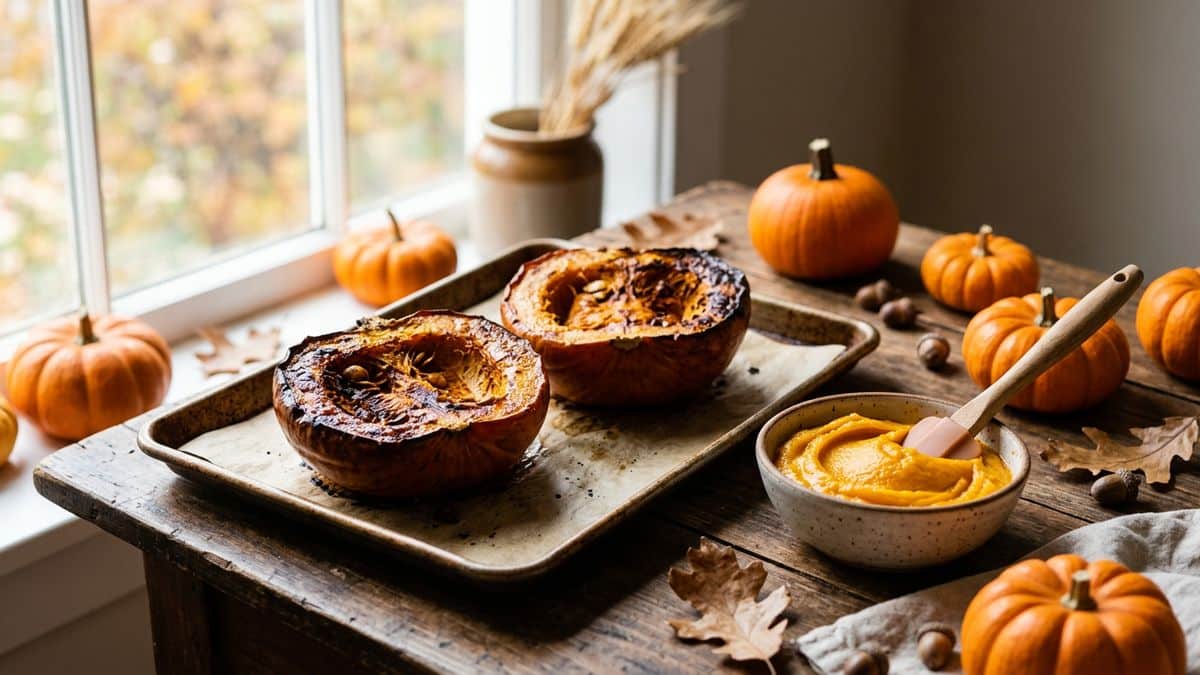
Now, the oven is the one most people reach for, since it needs no babysitting. Illinois Extension says to set the halves cut side down in a shallow baking dish and bake at 350°F for 30 minutes or longer. A bigger pumpkin takes longer, so go by the fork test, not the clock.
Microwave
If you are figuring out how to make pumpkin puree on a weeknight, the microwave is the fast lane. Illinois Extension says to set the halves cut side down and microwave on high for 15 minutes, or until fork tender.
Boil, Steam or Pressure Cooker
Cut the pumpkin into chunks first so it cooks evenly, then boil them in a small amount of water or steam them until soft. A pressure cooker works too; use the times in your cooker’s own manual. Then scrape the soft flesh off the rind.
Cutting a hard pumpkin is the most dangerous step in the whole job, by the way. Use a big, sharp knife, keep the pumpkin flat on the board, and cut it in half before you try anything clever. The pumpkin does not have to win the wrestling match.
Mash, Puree and Drain
Once the flesh is soft, UNL Extension says to mash it by hand or use a food processor or blender. That is the whole trick behind how to make pumpkin puree smooth: cook it soft enough that the blender does the rest.
If the puree looks thinner than you want for pie, let it drain. Line a strainer with cheesecloth, set it over a bowl, and give it time in the refrigerator. The NCHFP says the same about its canned cubes. Drain the jars, then strain or sieve the cubes before they go in a pie.
How Long Does Pumpkin Puree Last?
Knowing how to make pumpkin puree is half the job. Storing it is the other half. Illinois Extension says to use homemade puree or butter within three to four days in the refrigerator. That is not long, so if you made a big batch, freeze most of it the day you make it.
Freezing Pumpkin Puree
Freezing is the NCHFP-approved way to keep homemade puree. It is simple:
- Cook the pumpkin by boiling, steaming, pressure cooker or oven, then mash it.
- Cool it fast: the NCHFP says to set the pan in cold water and stir now and then.
- Pack it in freezer containers or bags, leaving 1/2-inch headspace, then seal and freeze.
- Label each one with the date. UNL Extension says puree “freezes very well” for up to one year.
Freeze it in the amount your recipes call for, so you thaw only what you need.
Why You Cannot Can Pumpkin Puree
So why not just pressure can the puree like everything else? Because nobody has a tested time for it, and the NCHFP explains why nobody can write one.

- Acidity swings. Pumpkin is a low-acid food. University of Missouri testing in 1995 found batches made from the same formula varied widely. Pumpkin butters made by home canners tested as high as pH 5.4, which leaves room for Clostridium botulinum to make toxin.
- Thickness swings. University of Minnesota studies in the 1970s found thickness varied so much that “a single processing recommendation to cover all the variability could not be calculated.”
- The old directions are gone. Illinois Extension notes that old USDA directions for canning mashed or pureed pumpkin “were withdrawn in 1989.”
Remember, adding lemon juice, vinegar or sugar does not fix it either, according to the NCHFP. With no tested time, there is no way to know a given jar was processed long enough. The puree goes in the freezer. Period. Our guide to preventing botulism when canning explains why low-acid foods get this much respect.
How to Can Pumpkin Cubes Instead

Think of it this way: how to make pumpkin puree for the pantry means canning cubes now and mashing them later. The NCHFP has one tested process for pumpkin, from its “Pumpkins and Winter Squash, Cubed” page:
- Wash the pumpkin, remove the seeds, cut it into 1-inch-wide slices and peel them.
- Cut the flesh into 1-inch cubes. Do not mash or puree.
- Boil the cubes in water for 2 minutes.
- Fill hot jars with cubes and cooking liquid, leaving 1-inch headspace.
- Adjust the lids and process in a pressure canner at the time and pressure for your altitude below.
Plan on about 2 1/4 pounds of pumpkin per quart; the NCHFP says 7 quarts take about 16 pounds, and a load of 9 pints takes about 10 pounds.

| Gauge | Altitude | Pressure |
|---|---|---|
| Dial | 0 to 2,000 ft | 11 lb |
| Dial | 2,001 to 4,000 ft | 12 lb |
| Dial | 4,001 to 6,000 ft | 13 lb |
| Dial | 6,001 to 8,000 ft | 14 lb |
| Weighted | 0 to 1,000 ft | 10 lb |
| Weighted | Above 1,000 ft | 15 lb |
National Center for Home Food Preservation, “Pumpkins and Winter Squash, Cubed.” Hot pack, 1-inch headspace. Pints 55 minutes, quarts 90 minutes at every pressure shown.
Notice there is no boiling-water option in that table. Pumpkin cubes go in a pressure canner or they do not get canned. Our best pressure canner guide compares dial and weighted models. The home canning time chart keeps every tested time on one page.
Puree or Cubes? A Pumpkin Planner
Got a pile of pie pumpkins and a decision to make? Weigh them, then read across. The canning columns use the NCHFP yields: about 2 1/4 pounds per quart, and 10 pounds per 9 pints.
| Pumpkin | Quarts of cubes | Or pints | Puree instead |
|---|---|---|---|
| 5 lb | About 2 | About 4 | Freeze it |
| 10 lb | About 4 | About 9 | Freeze it |
| 16 lb | About 7 (one load) | About 14 | Freeze it |
| 32 lb | About 14 (two loads) | About 28 | Freeze it |
Yields from the NCHFP cubed pumpkin process. Your actual count depends on how much rind and seed cavity each pumpkin has.
The last column never changes, and that is the point. Learning how to make pumpkin puree is a freezer skill, not a canning skill. If you are growing your own for next year, our pumpkin planning page covers the garden side.
Frequently Asked Questions
Is it better to roast or boil pumpkin for puree?
Both are on the NCHFP list, so pick by convenience. Roasting at 350°F is hands-off. Boiling needs the pumpkin cut into chunks first.
Can I make pumpkin puree from a regular carving pumpkin?
Yes, if it is uncarved and firm. UNL Extension notes carving pumpkins are larger with stringier pulp, so a pie pumpkin gives smoother puree.
How long does homemade pumpkin puree last in the fridge?
Three to four days, per Illinois Extension. Freeze anything you will not use by then.
Can you freeze pumpkin puree?
Yes. Cool it, pack it with 1/2-inch headspace, and freeze. UNL Extension says it keeps up to one year.
Can you water bath or pressure can pumpkin puree?
No. There is no tested process for either. Can 1-inch cubes in a pressure canner and mash them after you open the jar.
That is how to make pumpkin puree without gambling on a jar. When the freezer bags are full, Popular BBQ’s smoked pumpkin pie is a fine place to spend a few.
Sources: National Center for Home Food Preservation, “Pumpkins and Winter Squash, Cubed”; NCHFP, “Freezing Pumpkin”; NCHFP, “Beware: Pumpkin Butter”; University of Illinois Extension, “Preserving Pumpkin”; University of Illinois Extension, “Preparing Pumpkin”; University of Nebraska-Lincoln Extension, “Fall Pumpkin Fun.”


Reader Favorites
Homestead reference charts
Three field guides worth bookmarking — canning times, cellar storage, and safe cooking temps.
| Food | Pressure | Pint |
|---|---|---|
| Green beans | 10 lb | 20m |
| Corn | 10 lb | 55m |
| Tomatoes | water bath | 35m |
USDA/NCHFP processing times & pressures for common foods.
View full chart →| Item | Store | Keeps |
|---|---|---|
| Onions | cool, dry | 9 mo |
| Potatoes | cellar | 4–6 mo |
| Apples | cellar | 6 mo |
How long fruit & veg keep in the cellar, fridge and freezer.
View full chart → Network| Doneness | Target |
|---|---|
| Rare | 125–130°F |
| Medium-rare | 130–135°F |
| Well-done | 160°F+ |
Safe pull temps for steak & burgers, from Popular BBQ.
View full chart →