Bird Flu in Backyard Flocks: A 48-Hour Biosecurity Checklist for Spring 2026

By Top Class Talent · Published April 24, 2026 · 7 min read
Last updated: May 22, 2026 · Originally published April 24, 2026
Short answer: Highly Pathogenic Avian Influenza (HPAI) is hitting U.S. backyard flocks hard this spring. In April 2026 alone, cases have been confirmed in Iowa, Kentucky, and Pierce County, Georgia (where a 60-bird flock was depopulated on April 16). Close six biosecurity gaps this weekend: cover the run with hardware cloth, move wild-bird feeders 100+ feet away, dedicate coop boots with a sanitizing bath, quarantine any new birds for 30 days, separate waterfowl from chickens, and post your state veterinarian’s phone number on the coop door.
Why Spring 2026 Is Different
Officials at USDA APHIS and multiple state veterinary offices are calling this the largest HPAI outbreak in U.S. history. Spring migration along the Mississippi, Central, and Atlantic flyways is moving the virus northward at roughly the same pace as warming temperatures, and unlike previous years, backyard operations are no longer incidental — they’re showing up in the case reports every week.
Recent backyard depopulations and confirmed cases since April 1, 2026:
- Pierce County, Georgia (April 16): 60-bird mixed flock of chickens, ducks, geese, and turkeys depopulated after HPAI confirmation.
- Iowa (early April): multiple backyard flocks confirmed positive; commercial flocks have remained uninfected so far this year, which is statistically unusual.
- Kentucky (April 8 reporting): backyard cases part of the outbreak the state veterinarian described as historic in scale.
The virus arrives on your property three ways: direct wild-bird contact, contaminated water (ponds, puddles where waterfowl have been), and contaminated surfaces you track in on boots or clothing. The 48-hour checklist below addresses all three pathways.

The 48-Hour Biosecurity Checklist
1. Cover the run with hardware cloth
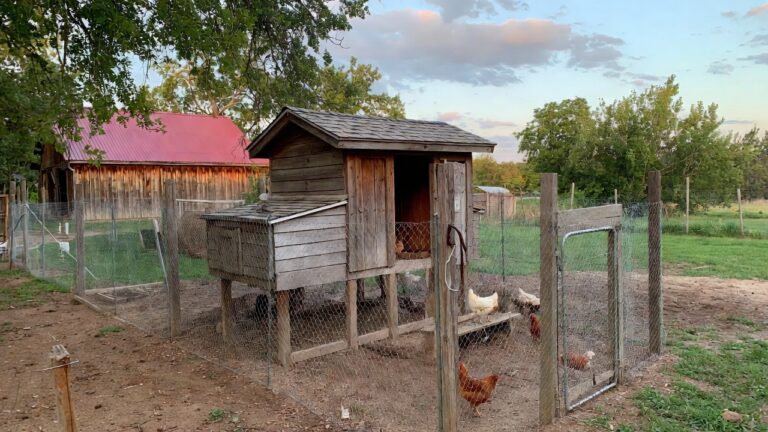
Bird netting is a stopgap; songbirds and sparrows still get through and shed virus in droppings. Hardware cloth (½″ or smaller mesh) on the top and upper sides of the run stops wild birds, rats, and most raptors. Apron the bottom 12″ outward to stop dig-under predators. Budget: $200–$500 for most residential runs; a weekend install with two people.
2. Move wild-bird feeders 100+ feet from the coop
Or pull them entirely for the rest of spring migration. The songbirds that love your suet block are the same species that pass through waterfowl wetlands, and they carry virus on feet and feathers. If you want to keep feeding wild birds, relocate to the opposite side of the house from your coop.
3. Dedicated coop boots and a sanitizing bath
One cheap pair of rubber boots that never leaves the run area. At the coop gate, a shallow tray with Virkon-S or a 1:10 bleach solution refreshed weekly. Step in, step over, step out. This one change alone closes the biggest cross-contamination gap on most homesteads. Total cost: $25.
4. Quarantine any new bird for 30 days
Separate airspace, separate hands, separate waterer, separate feed scoop. Thirty days is the outer window for HPAI to show clinical signs; a three-day “look OK” check isn’t enough. Yes, this includes birds from your neighbor’s flock, from the local swap, and from the feed store.
5. Lock down the waterfowl
On-property ducks and geese are the highest-risk vectors for bringing HPAI from wild-bird encounters into your chicken flock. If you keep both, physically separate them: different enclosures, different waterers, different humans handling them where possible. If your waterfowl free-range near ponds or creeks, expect to confine them for the duration of the outbreak.
6. Post your state veterinarian’s phone number on the coop door
Any die-off of three or more birds within 24 hours gets reported. You’re not calling to get in trouble — you’re calling to protect your neighbors and yourself. Most states have a 24/7 reporting hotline, and early reporting usually results in testing at no cost to you. The USDA APHIS state office directory has every number.
What to Do If You Suspect HPAI
- Stop all movement in and out of the coop. Nobody goes in without dedicated boots. Nobody takes eggs, manure, or equipment off the property.
- Call your state vet within 24 hours. Do not call your neighbors first.
- Double-bag any dead birds in contractor-grade bags and store them cold until testing guidance arrives. Do not compost. Do not bury until authorities have confirmed or ruled out HPAI.
- Do not treat with antibiotics. HPAI is viral; antibiotics don’t work and they mask clinical signs that matter for diagnosis.
- Keep a timeline log. First sick bird, date; first death, date; contact history; feed sources; any recent bird additions. The state vet will ask.
Should I Stop Free-Ranging?
Short answer: Not reflexively. Restrict range away from ponds, creeks, and fields with documented waterfowl traffic. Full confinement creates its own welfare and predator problems. A hardware-cloth-covered run with a small outdoor paddock is the practical compromise for most homestead flocks.
Full confinement is the right call only if (a) your state veterinarian issues a confine-at-home order, (b) your property hosts regular waterfowl traffic, or (c) you’re in a county with a confirmed backyard case. Otherwise, restricted range beats the predator, behavior, and welfare problems that come with long-term confinement.
If you do restrict range and your flock spends more time in the coop and run, expect predator pressure to increase as local raccoons, opossums, and hawks notice the concentration. This is the moment to tighten predator defenses on the run perimeter — see our related guide on predator control for working homesteads.
Frequently Asked Questions
Can my chickens catch HPAI from my songbird feeder?
Indirectly, yes. Songbirds share flight paths and watering spots with infected waterfowl, pick up virus, and shed it at feeders. Moving or removing the feeder for the duration of spring migration is the cheapest single biosecurity win available.
Is it safe to eat eggs from my flock during the outbreak?
Yes, if your flock is healthy. HPAI-infected birds typically stop laying within days of infection, and clinical signs appear quickly. Properly cooked eggs are safe even in the rare event of a mildly infected bird, but you should not eat eggs from a visibly sick flock, and you must report a die-off before continuing to sell or gift eggs.
Will my flock need to be depopulated if one bird tests positive?
In most states, yes. HPAI is a reportable disease; the standard response protocol is depopulation of the affected flock with federal indemnity payments to the owner. This is painful, and it’s why the biosecurity work above matters — prevention is the only real strategy.
How long should I wait to restock after an HPAI outbreak on my property?
Most state vets recommend a minimum 30-day wait after the final cleanup inspection, with new birds sourced from NPIP-certified suppliers and the 30-day quarantine protocol above. Some states require 90 days. Ask your state vet for the specific clean-and-disinfect protocol before you bring new birds home.
Further Reading
For the full seasonal picture — how the virus reaches a flock, the warning signs to watch for, and the long-game biosecurity routine — see our complete guide to protecting backyard chickens from bird flu in 2026.
- 72-Hour Emergency Kit for Homesteads — biosecurity gear belongs in the core kit.
- Suppressors on the Homestead — when restricted range increases predator pressure on the run.
- University of Minnesota Extension: Avian Influenza Basics for Backyard Owners
- USDA APHIS Defend the Flock Program


Reader Favorites
Homestead reference charts
Three field guides worth bookmarking — canning times, cellar storage, and safe cooking temps.
| Food | Pressure | Pint |
|---|---|---|
| Green beans | 10 lb | 20m |
| Corn | 10 lb | 55m |
| Tomatoes | water bath | 35m |
USDA/NCHFP processing times & pressures for common foods.
View full chart →| Item | Store | Keeps |
|---|---|---|
| Onions | cool, dry | 9 mo |
| Potatoes | cellar | 4–6 mo |
| Apples | cellar | 6 mo |
How long fruit & veg keep in the cellar, fridge and freezer.
View full chart → Network| Doneness | Target |
|---|---|
| Rare | 125–130°F |
| Medium-rare | 130–135°F |
| Well-done | 160°F+ |
Safe pull temps for steak & burgers, from Popular BBQ.
View full chart →