How to Drought-Proof Your Homestead Garden in 2026: The Mid-May Window That Decides Your Harvest
Last updated: August 28, 2026 · Originally published: May 15, 2026
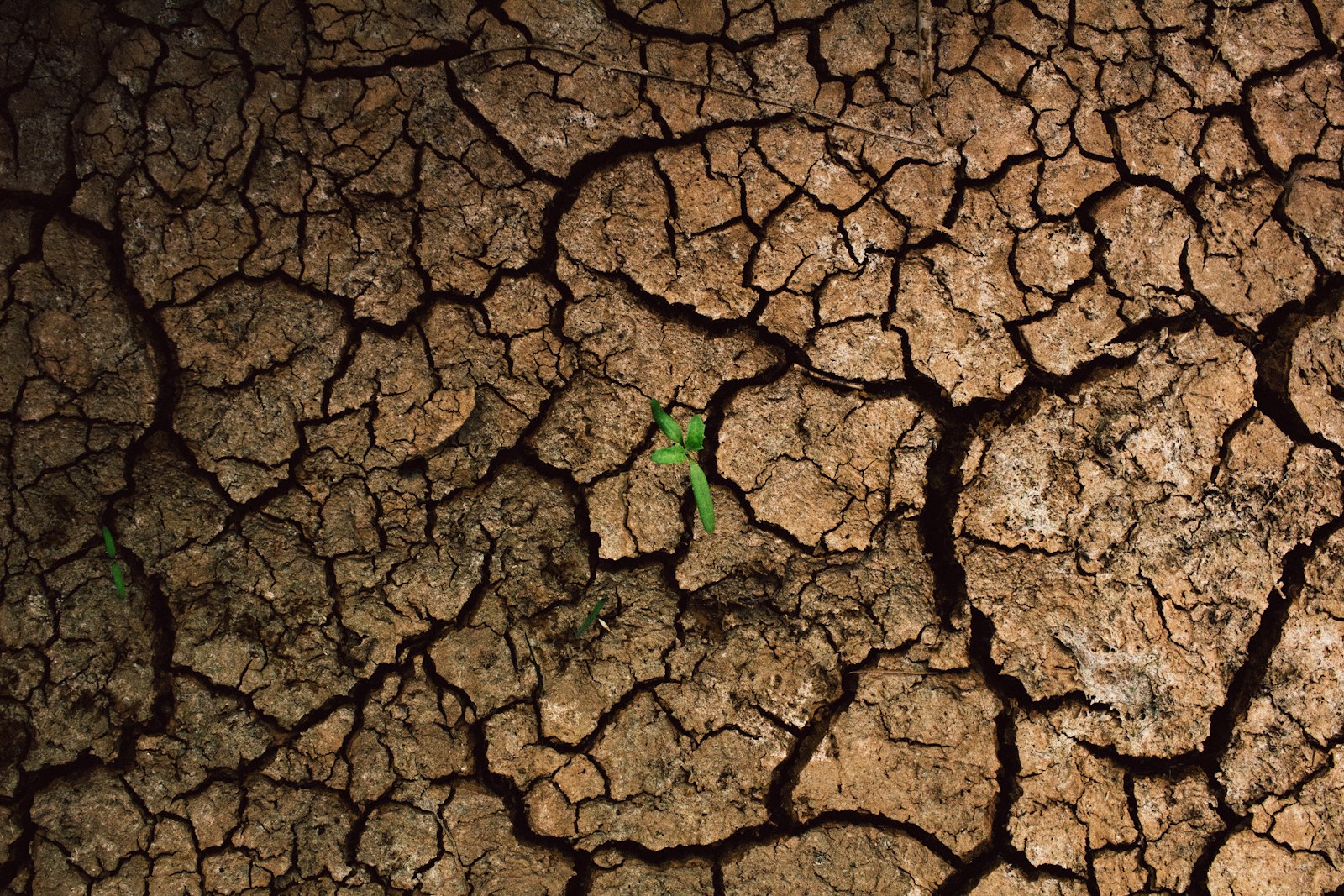
About 75% of the United States is in dry-to-drought conditions as of May 1, 2026 — the steepest pre-summer reading NOAA’s Climate Prediction Center has issued in a decade. If you’ve been waiting to drought-proof your homestead garden, the window to act is now. The updated seasonal outlook puts the Pacific Northwest, the Great Basin, the Mid-Atlantic, and the southern Appalachians on track for persistent drought through July. The Southeast is forecast to keep deteriorating into early summer. Snow water equivalent across the Pacific Northwest, California, and the Great Basin sits below 50% of normal — the reservoir water that feeds wells and irrigation systems from now through harvest.
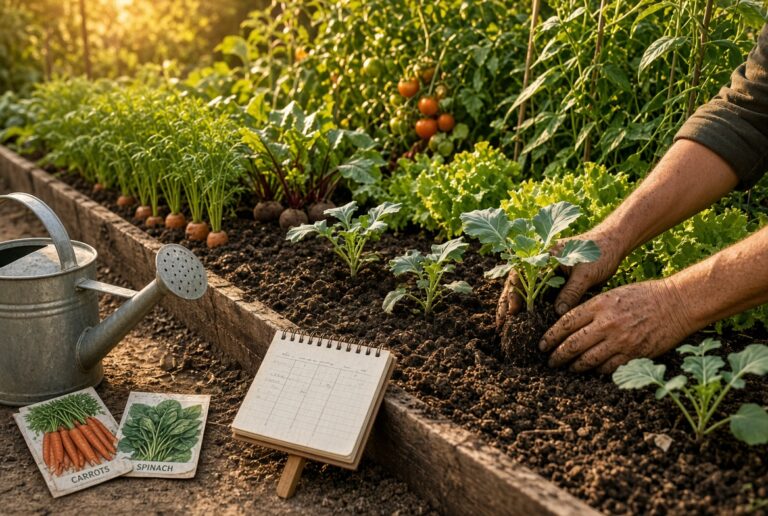
However, Mid-May is the last quiet window before the soil starts cooking. The plants you’ll be carrying through July got transplanted in the past six weeks. The infrastructure you’ll lean on — drip, mulch, capture — only works if it’s installed now, while the soil is still cool and the calendar still says spring.
So this guide is the mid-May action plan to drought-proof a homestead garden in 2026: seven steps in the order they need to happen, a triage protocol if the drought arrives faster than the calendar says it should, and the source data behind every recommendation.
What NOAA’s Summer 2026 Outlook Actually Says
The NOAA Climate Prediction Center issued the May Monthly Drought Outlook on May 1, with the seasonal version reaffirming the April 16 forecast logic. Three takeaways for homesteaders:
- Drought is expected to persist and expand across most of the West through July, with new development likely in California and the Great Basin starting in late May.
- The Mid-Atlantic and southern Appalachians stay dry. Improvement is forecast for Texas and much of the Southeast, but it is weighted toward late June and July — after the heat damage to early-summer plantings is already done.
- ENSO is shifting. The Climate Prediction Center now puts the chance of El Niño developing by late summer near 90%, with a 62% chance of conditions appearing as early as June or July. That changes the late-season rainfall picture. It does not save the June garden.
The most reliable number in the May outlook: nearly 20% of the United States is observing severe drought today, and snow water equivalent across the Pacific Northwest, California, and the Great Basin is below 50% of normal. Snowpack is what feeds rivers, wells, and irrigation reservoirs through July. Below 50% in May is not a forecast — it is a fact already on the ground.
Why the Mid-May Drought-Proof Window Matters More Than July
By July, a drought-proofing decision is a triage decision. By May, it is a system decision. The difference is whether you are choosing which plants to keep alive or building the conditions that let everything live.
Three things change after Memorial Day that make every drought-proofing task harder:
- Soil temperature rises past the workable window. Once topsoil clears 75°F, you cannot dig drip lines or amend beds without losing soil moisture faster than you save it.
- Second, mulch arrives too late. However, mulch laid on warm, dry soil insulates the dryness in place. By contrast, mulch laid on cool, moist soil in May locks moisture down for the next ten weeks.
- Heat-stressed plants don’t transplant. Anything that needs to go from cell tray to ground has to go now. Hardening off is the limit, not the start.
Step 1: Test Your Soil’s Water-Holding Capacity
Skip the lab kit if you don’t have one. Two minutes with a shovel tells you what you need to know. Dig a one-foot hole. Fill it with water. Wait for it to drain. If it drains in less than 30 minutes, your soil sheds water. If it takes more than four hours, your soil holds water but cannot breathe.
In either case, the fix is organic matter. Three inches of compost, worked into the top six inches of the bed, will move sandy soil toward holding capacity and move clay soil toward drainage. Don’t till deeper than that. The lower soil layers are doing fine without your help, and breaking them up wastes moisture.
If you only have time to fix one bed, fix the bed with the heaviest feeders: tomatoes, peppers, squash, and brassicas. They are the first to bolt or stall when water gets tight.
Step 2: Install Drip Irrigation Before the Heat Wave You Cannot Predict
A standard garden hose loses 30% to 50% of its water to evaporation before it reaches the plant. Drip irrigation reduces that loss to under 10%. The water lands at the root, where it counts.
For a minimum viable setup, the drip stack for a 200-square-foot bed: a half-inch supply line, a pressure regulator (drip systems run at 15 to 25 psi, not the 50 to 60 psi out of a household tap), a filter (well water clogs emitters in a single season), and 1/4-inch drip lines laid four to six inches from each plant base. Add a battery-powered timer and run the system at dawn. Pre-dawn watering reduces evaporation by another 20% to 30% over midday runs.
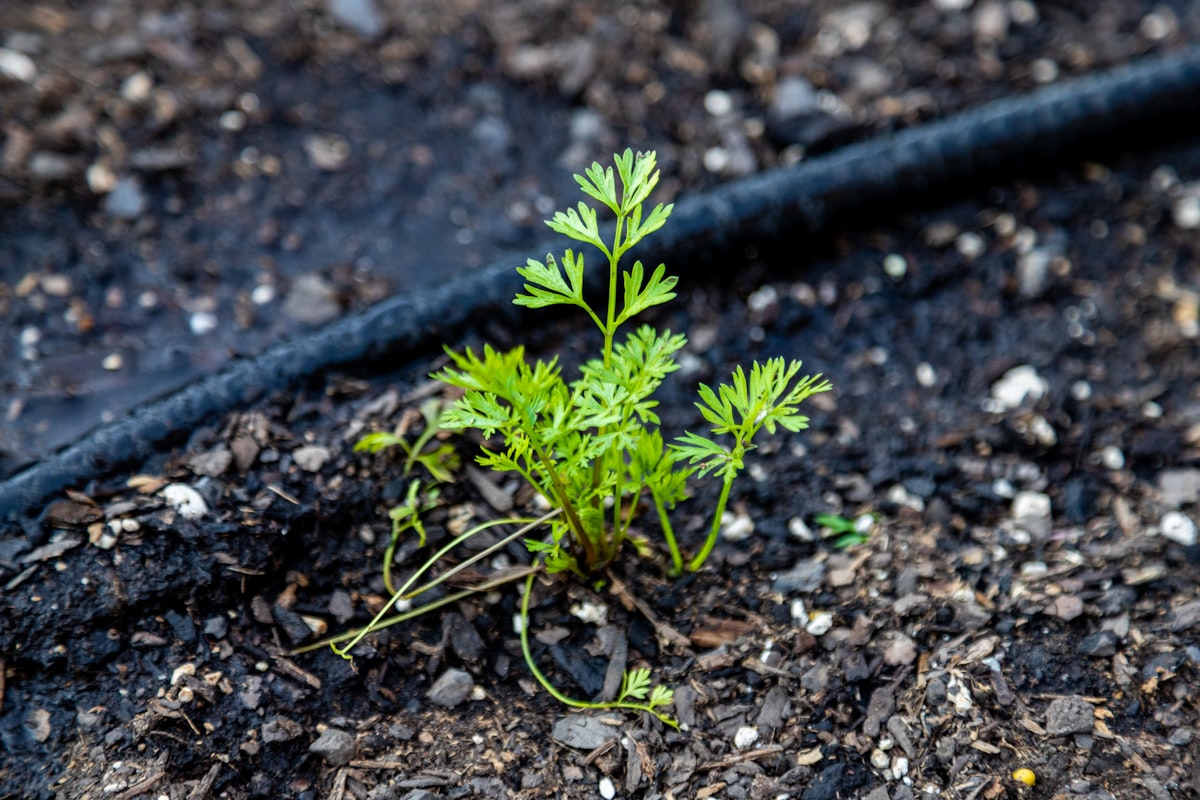
Additionally, two upgrades worth the spend in 2026, not 2028: a soil moisture sensor that pauses the system when the bed is already wet, and a Wi-Fi controller that holds the schedule when a thunderstorm rolls through unexpectedly. The cheaper sensors run $20 to $40 and pay back in saved water inside a single dry stretch.
Step 3: Mulch Deep — The Highest-ROI Drought-Proof Move on the Homestead
Mulch is the single highest-return drought tool a homesteader has. A three-inch layer of organic mulch cuts evaporation by roughly 70% and holds soil temperatures eight to twelve degrees cooler under the canopy. Watering frequency drops by half. Sometimes more.
Notably, the choice of mulch material matters less than the depth. Straw, wood chips, shredded leaves from last fall, and untreated grass clippings all work. Avoid hay (it carries weed seed) and avoid dyed wood chips (the dye is fine, but the wood is often pallet wood with unknown treatment).
Finally, apply mulch to wet soil, not dry. If the bed has been sitting dry for a week, water it deeply first, then mulch. Mulch on dry soil is a lid on an empty pot. Re-mulch in late June if the first layer has broken down past the two-inch mark — top off, don’t strip and replace.
Step 4: Pick Drought-Tolerant Varieties for Your Updated Hardiness Zone
The USDA Plant Hardiness Zone Map was updated in November 2023 for the first time since 2012. About half the country moved up half a zone. That isn’t a forecast — it is weather station data from 1991 to 2020 across 13,412 stations. If you’ve been planting from a 2012-era list, you have been planting for a climate that ended five years ago.
Two practical takeaways for 2026:
- Look up your zone now, not later. If you shifted up half a zone, your last-frost date moved earlier, your first-frost date moved later, and your summer heat window got longer in both directions.
- Bias your seed order toward drought-tolerant varieties. Tomatoes: Black Krim, Punta Banda, Pearson. Beans: Anasazi, Rattlesnake, Tepary. Squash: Seminole, Cushaw, Tatume. Corn: Hopi Blue, Painted Mountain. These aren’t novelty seeds — they are varieties bred in places that get less water than your homestead is about to get.
Therefore, order what you need by mid-May. Seed suppliers run thin on drought-tolerant varieties by mid-June. Check our seed-starting system guide for replant timing if the first round struggles in heat.
Step 5: Capture Roof Runoff Before You Need It
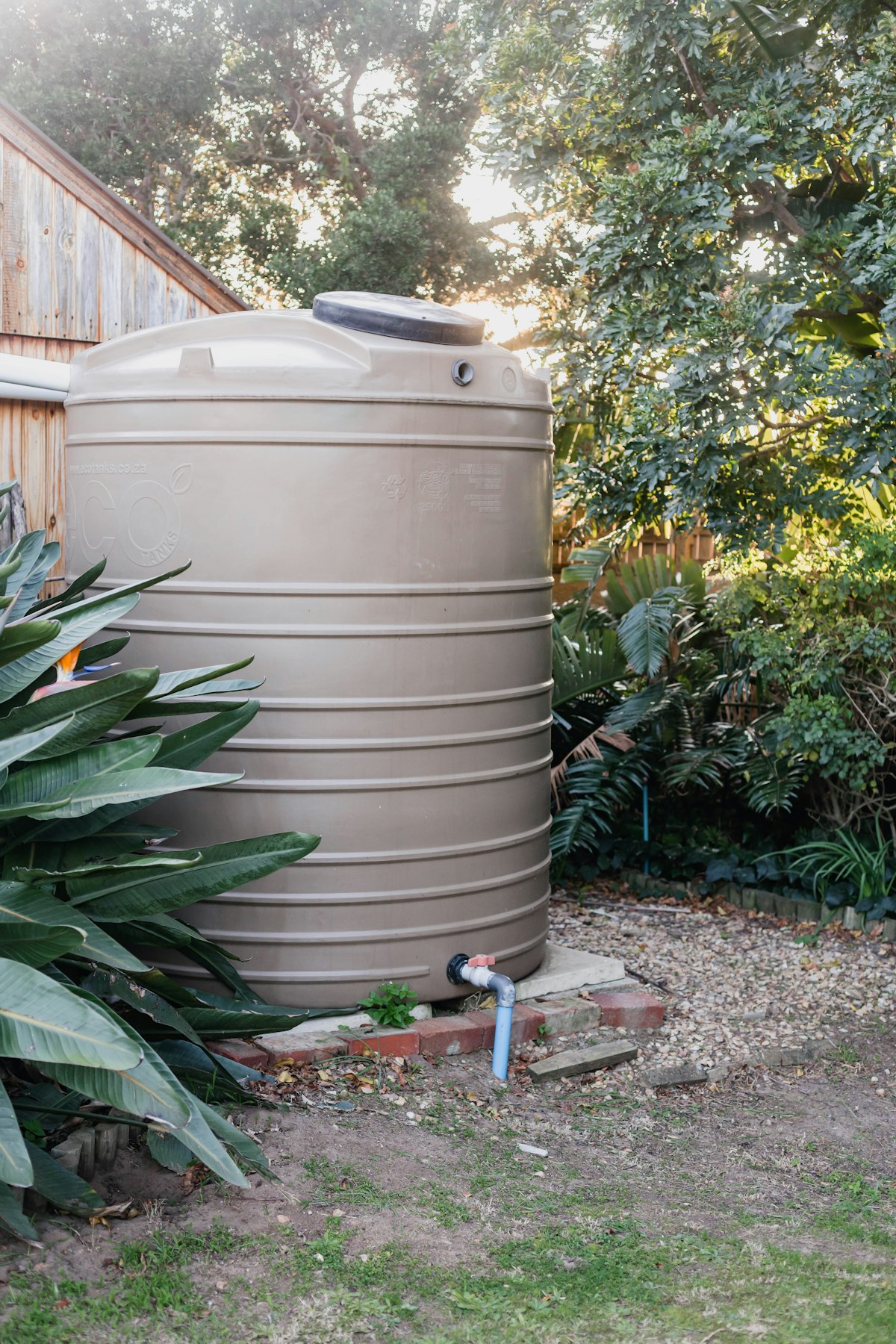
A 1,000-square-foot roof produces 600 gallons of water from a single inch of rain. In most homestead zones, that is three to five usable rain events a month, even in a dry summer. Captured water is the difference between watering on a schedule and watering on a hope.
For a minimum viable rainwater system, build: a downspout diverter, a 55-gallon food-grade barrel (or a 275-gallon IBC tote if you have the footprint), a fine screen at the inlet (mosquitoes will find the smallest opening), and an overflow line that returns excess to a vegetated swale.
However, two safety notes apply. Rainwater off an asphalt-shingle roof is fine for vegetable irrigation but is generally not recommended for drinking without filtration. Many states have specific rainwater capture rules — Colorado, for example, caps household capture at 110 gallons. Check your state’s rules before installing anything past the barrel stage. (For backcountry and off-grid water sourcing techniques beyond the homestead, see our sister property PopularOutdoorsman.com.)
Step 6: Group Plants by Water Need (Hydrozoning the Homestead)
A garden built without hydrozoning waters everything to the thirstiest plant’s schedule. That is how you over-water onions to keep tomatoes alive. Hydrozoning is the practice of grouping plants by water need so the irrigation matches the bed, not the most demanding occupant.
Three rough zones to design around:
- High water (daily in heat): tomatoes, peppers, squash, cucumbers, lettuce, brassicas.
- Medium water (twice weekly): beans, corn, sweet potatoes, melons.
- Low water (weekly or less): established herbs, established asparagus, perennial alliums, drought-tolerant grain crops.
Re-bed the high-water plants closest to the spigot and the rain barrel. Push the low-water plants to the back forty. The plants don’t care about the layout; the labor savings compound across the season.
Step 7: Cut Lawn and Build a Drought-Proof Homestead Landscape
The fastest way to cut a homestead’s water bill is to retire the lawn. A 1,000-square-foot lawn drinks about 28,000 gallons of water a year in a drought-prone zone. The same square footage in mulched beds, gravel paths, and hugelkultur mounds drinks under 4,000.
Meanwhile, hugelkultur is the practice of building raised beds over a buried base of partially decomposed logs. The wood acts as a sponge, holding water in the bed for weeks. A first-year hugelkultur mound needs about as much water as a conventional bed; by year three, it needs almost none.
Similarly, sunken pathways — the gravel between beds set six inches below grade — collect rainwater and direct it under the bed walls into the root zone. They cost an afternoon and a few wheelbarrows of pea gravel. They pay back the first week the rain skips you.
Triage Protocol: When the Drought-Proof Plan Needs a Backup
The plan is to drought-proof in May. The backup is to triage in July. If the forecast accelerates and the heat dome lands before the calendar says it should, work this order:
- Pull anything that has already crashed. Bolting lettuce, stunted brassicas, anything past the help line. Their root systems are not holding moisture for the rest of the bed; they are competing for it.
- Mulch deeper on the survivors. Top off to four inches. The plants that are left earn the resource.
- Shade the high-value beds. 30% shade cloth on tomatoes and peppers during 100°F-plus stretches keeps fruit setting that would otherwise abort.
- Cut the lawn last, water it never. Cool-season grass goes dormant in drought and greens back when rain returns. Don’t waste irrigation water keeping it green.
- Preserve what you have, same-day. Pick early in the morning, preserve before sundown. Heat-stressed produce loses shelf life fast. See the home food pantry guide for jar-by-jar storage windows.
Methodology: How These Practices Were Selected
The seven steps in this guide draw from NOAA’s May 2026 Seasonal Drought Outlook, USDA Cooperative Extension drought-response publications from the past three years, the Drought.gov forecast portal, and public field-trial data on drip-versus-overhead irrigation efficiency. Percentages cited for evaporation reduction and water savings reflect the median of published field studies; individual results vary by soil type, microclimate, and management.
This article was last updated May 14, 2026. NOAA reissues the Monthly Drought Outlook on the first of each month and the Seasonal Drought Outlook on the third Thursday. Check the source pages before locking in any irrigation decision past June 1.
FAQ: Drought-Proofing Your Homestead Garden in 2026
How early should I install drip irrigation in 2026?
Mid-May is the latest practical window in most of the United States. The soil is still cool, the spring rains soften the dig, and the system has time to bed in before the first heat wave. Installing drip in July works mechanically but loses the soil-moisture head start the May window gives you.
What is the minimum mulch depth for a drought-proof homestead garden?
Three inches is the floor. Four inches is the target. Less than three inches does not cut evaporation enough to matter. More than five inches starts to slow water penetration during light rain events — the rain runs off the top before it reaches the soil.
Is rainwater harvesting actually worth installing on a half-acre garden?
Yes, in most of the Lower 48. A 1,000-square-foot roof produces 600 gallons of usable water per inch of rain. Three to five rain events a month from May through August can produce 7,000 to 10,000 gallons across the season — enough to fully water a 200- to 400-square-foot intensive bed.
Strategy and Long-Range Drought Questions
Do the 2023 USDA hardiness zone changes mean I should plant earlier in 2026?
If your zone shifted up half a step, your last-frost date moved earlier and your first-frost date moved later. That extends the growing window in both directions, but it also stretches your summer heat exposure. Plant heat-sensitive crops earlier (peas, lettuce, brassicas) and plant heat-loving crops later, so the harvest lands after the September cool-down rather than during the August peak.
Should I worry about El Niño changing the outlook mid-season?
NOAA’s current forecast puts the chance of El Niño developing by late summer near 90%. Late-season rainfall improvements help fall plantings and overwintered crops, but they do not rescue the June and July garden. Plan for the dry mid-summer and let the late-season rain be a bonus.
Are there state rules on rainwater harvesting I should check?
Yes, especially in the Western United States. Colorado caps household harvesting at 110 gallons. Utah, Texas, and Nevada have specific permitting rules above certain volumes. Most Eastern states are unrestricted, but utility-fed properties may have plumbing-code restrictions on grey-water reuse. Check the rule before scaling past a single barrel.
What is the single highest-impact step if I can only do one thing?
Mulch. Three to four inches of organic mulch on every bed cuts evaporation by roughly 70%, halves watering frequency, and keeps soil temperatures eight to twelve degrees cooler at root depth. If the season runs short and you can only execute one task, lay mulch.
The Drought Doesn’t Care About Your Harvest Plan
The forecast does not care about your harvest plan. But the harvest plan has to care about the forecast. So the next three weeks are the difference between a homestead that watches the drought hit and a homestead that already accounted for it.
Last updated May 14, 2026. Author: James Nicholas, Editor-at-Large, BAM Network.
A garden that survived a dry summer is worth replanting. Late summer is when the fall crops go in, and cooler nights make water go much further — see What to Plant in August for a Fall Harvest for the zone-by-zone timing.
Reader Favorites
Homestead reference charts
Three field guides worth bookmarking — canning times, cellar storage, and safe cooking temps.
| Food | Pressure | Pint |
|---|---|---|
| Green beans | 10 lb | 20m |
| Corn | 10 lb | 55m |
| Tomatoes | water bath | 35m |
USDA/NCHFP processing times & pressures for common foods.
View full chart →| Item | Store | Keeps |
|---|---|---|
| Onions | cool, dry | 9 mo |
| Potatoes | cellar | 4–6 mo |
| Apples | cellar | 6 mo |
How long fruit & veg keep in the cellar, fridge and freezer.
View full chart → Network| Doneness | Target |
|---|---|
| Rare | 125–130°F |
| Medium-rare | 130–135°F |
| Well-done | 160°F+ |
Safe pull temps for steak & burgers, from Popular BBQ.
View full chart →