Spring Tick Prevention on the Homestead: 7 Steps That Actually Work
May is peak tick emergence. The 7 steps that actually move the needle on a working homestead — for kids, livestock, and dogs.
Self-reliance tips, rural living guides, and off-grid skills, every Friday.
Unsubscribe anytime.
✓ You're in! Check your inbox to confirm.

Three field guides worth bookmarking — canning times, cellar storage, and safe cooking temps.
| Food | Pressure | Pint |
|---|---|---|
| Green beans | 10 lb | 20m |
| Corn | 10 lb | 55m |
| Tomatoes | water bath | 35m |
USDA/NCHFP processing times & pressures for common foods.
View full chart →| Item | Store | Keeps |
|---|---|---|
| Onions | cool, dry | 9 mo |
| Potatoes | cellar | 4–6 mo |
| Apples | cellar | 6 mo |
How long fruit & veg keep in the cellar, fridge and freezer.
View full chart → Network| Doneness | Target |
|---|---|
| Rare | 125–130°F |
| Medium-rare | 130–135°F |
| Well-done | 160°F+ |
Safe pull temps for steak & burgers, from Popular BBQ.
View full chart →Reader Favorites
May is peak tick emergence. The 7 steps that actually move the needle on a working homestead — for kids, livestock, and dogs.
What to plant this May by USDA zone — peppers, beans, squash, melons. A working-homestead planting calendar for zones 3 through 9.
A small-batch rhubarb-ginger freezer jam that captures the bright spring flavor water-bath canning cooks away. 35 minutes active, yields 4 half-pints, keeps 12 months frozen.
The 2026 FDA raw milk enforcement push targets interstate sales only. Here’s what actually changed, what didn’t, and the three verifications you need before you sell another jar from your homestead.
HPAI is hitting backyard flocks in Georgia, Iowa, and Kentucky this April. Here’s the 48-hour biosecurity checklist that closes the gaps before the virus finds your coop.
Stop losing seedlings on transplant day. A day-by-day, 10-day hardening-off schedule for tomatoes, peppers, brassicas, and more — plus the three mistakes that kill more transplants than frost.
The $200 tax stamp is gone as of January 1, 2026, and Form 4 approvals are running 4–11 days. Here’s the practical case for suppressors on a working homestead — predator control, humane dispatch, hearing protection, and the 42-state legal map.
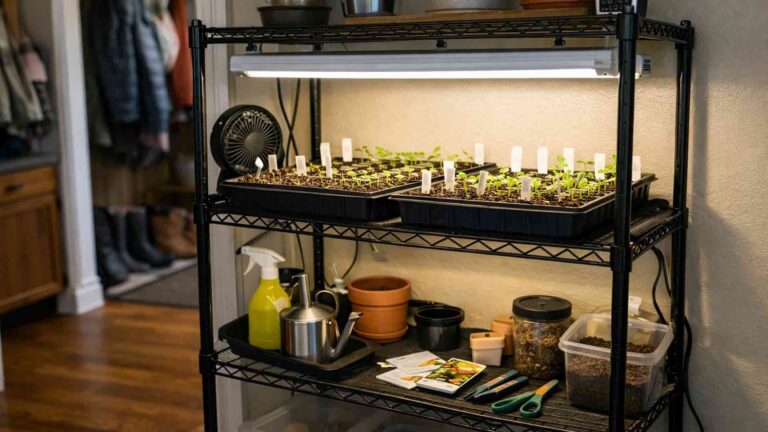
A stability-first seed starting system: setup, timing, light, moisture, sanitation, decision tree, troubleshooting, FAQs, and next steps for strong seedlings.
Most new homesteads don’t fail because people quit. Instead, they fail because expectations collide with reality. Homestead failure most often happens in the first year, when time, money, and systems break down faster than planned. At the start, everything feels possible. Land looks productive. Budgets seem flexible. Energy feels unlimited. However, once the season begins,…
A home food pantry is more than a storage space. It is a smart system that protects your budget, saves time, and gives your family peace of mind. With food prices staying unpredictable, many households are turning to pantry building as a practical step toward self-sufficiency. You do not need a basement or a large…
The Practical 72-Hour Emergency Kit for Homesteads A 72-hour emergency kit is one of the simplest, smartest preparedness moves a homestead can make. And yet, most rural households fall into one of two traps: they either overbuild some complicated, fantasy-level kit—or they don’t prepare at all. This guide cuts through that noise. Instead of fear,…
The holiday season isn’t just for big, store-bought gifts under the tree. One of the most meaningful traditions — especially on a homestead or in a cozy, self-reliant home — is filling stockings with homemade treats and crafts. These little gifts often carry more heart and personality than anything you could buy, and they’re especially…