Garden Varmint Control on the Homestead: When a Suppressed .223 Earns Its Keep
Editor’s note, 22 September 2026: this article was published on 2026-05-01 and describes an offer or giveaway that ran then. It has ended — check current pricing and availability with the retailer before acting on anything below.
Last updated: October 10, 2026 · Originally published May 1, 2026
Updated May 1, 2026.
Garden varmint control on a working homestead is a chore, not a sport. The fence didn’t work. Neither did the trap, the live-cage relocation, the dog, the floodlight, or the four-foot stake topped with aluminum pie plates. By June 15 last year, a single groundhog had cleared 18 feet of green-bean row and started on the squash. The math wasn’t about trophy hunting or politics — it was about whether the homestead grew enough food to make it through winter or whether it didn’t. That’s the honest framing for garden varmint control on a working property: it’s a chore, not a sport.
This is the practical case for a suppressed .223 as the quietest legal answer to garden-varmint pressure on a homestead in 42 states. Not the loudest answer. Not the most political answer. The most neighborly, most accurate, most reusable, most accountable tool for the job.
Garden varmint control: what “varmint” actually means on a working homestead

The list, ranked by annual damage on a typical small homestead:
- Groundhogs (woodchucks). One adult eats 1–1.5 pounds of vegetation per day. A burrow under a barn or coop foundation undermines the structure. USDA APHIS estimates groundhog damage at $300–$1,200 per affected garden per season.
- Rabbits. Strip seedlings overnight; girdle young fruit trees over winter. A breeding pair averages 25 offspring per year.
- Coyotes. Take poultry, kid goats, lambs, and barn cats. USDA APHIS reports coyotes account for roughly 60 percent of confirmed predator losses on small-flock and small-ruminant operations.
- Feral hogs. In southern and Texas homesteads, the single most destructive invasive species — root up an acre of pasture in one night.
- Raccoons, opossums, skunks, weasels. Coop-level pressure, addressed in the predator-proof coop checklist published earlier today.
The non-lethal tools — fences, traps, livestock guardians, exclusion — do real work. Ninety percent of varmint problems on a homestead are solved by exclusion before anything else. The remaining 10 percent are the ones that warrant a different tool.
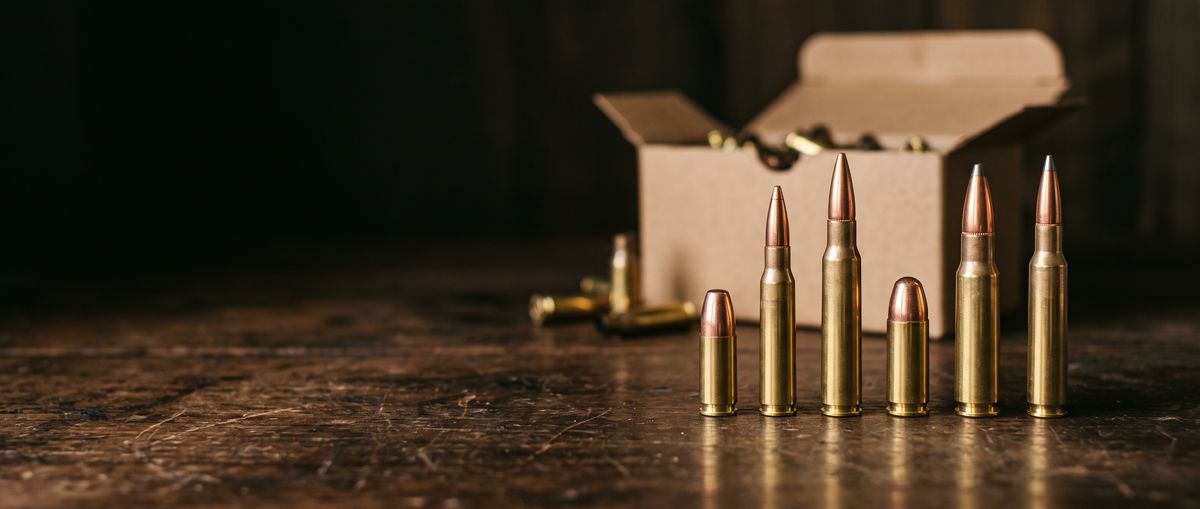

Garden varmint control caliber: why .223 Remington / 5.56 NATO earns its place
Caliber selection on a varmint-grade homestead rifle isn’t about what shoots flattest at 600 yards. It’s about four practical questions:
- Will it humanely dispatch the animal at typical homestead range? Yes — .223 with a 55-grain or 64-grain soft-point or polymer-tip bullet is humane on coyote-and-smaller game inside 200 yards, which covers 95 percent of homestead shots.
- Is the round affordable enough to practice with? Yes — .223 is the cheapest centerfire-rifle round in volume in the United States. A homesteader who shoots 200 rounds a year stays sharp without going broke.
- Will it overpenetrate into the neighbor’s livestock or property? The .223 is, in fact, less prone to overpenetration on soft tissue than larger calibers, because it tends to fragment on impact. Backstop discipline still matters — a known-safe earth backstop, every shot — but the round is a better neighbor than .308 or .30-06 for varmint work.
- Is it legal in your state for the species? Most states permit .223 for unprotected nuisance species — groundhogs, rabbits in certain seasons, coyotes year-round, feral hogs, raccoons, opossums — on private land. Some states regulate magazine capacity, suppressor use, or species-specific minimum calibers. Check your state DNR before any field use.
Garden varmint control: why the suppressor is not a luxury

The suppressor question on a homestead is not aesthetic. It’s about four very practical concerns:
1. Hearing protection — the homesteader’s
An unsuppressed .223 from a 16-inch AR-15 produces a peak sound pressure level of approximately 165 decibels at the shooter’s ear. OSHA defines occupational hearing damage at sustained exposure above 85 dB; 140 dB is the threshold for instantaneous permanent damage. One unprotected .223 shot is enough to cause permanent hearing loss. A quality .223 suppressor brings that peak down to roughly 132–138 dB — below the instantaneous-damage threshold, hearing-safe with single-use earplugs as backup. For the homesteader who works near the property line, the chickens, or the family, a hearing-safe rifle is a baseline-safety tool.
2. Hearing protection — everyone else’s
Livestock spook hard at gunshot reports. Cattle stampede. Goats panic. Horses bolt. Chickens stop laying for 48 hours. A suppressed shot reduces the report enough that most livestock barely react — the difference between a thunder-clap and a hand-clap. On a working homestead with neighbors within a half-mile, it’s also the difference between a nuisance complaint and the neighbor never knowing you handled the coyote.
3. Accuracy
Suppressors reduce muzzle rise and felt recoil. On a varmint rifle, where the shot has to be precise to be ethical, the can earns its place purely on shot accountability. A homesteader who can place every round in a 2-inch circle at 100 yards with a suppressed .223 is dispatching humanely; the same rifle unsuppressed flinches off-target 1 in 4 shots in real-world conditions.
4. Legal accessibility
Civilian suppressor ownership is legal in 42 U.S. states for hunting, target shooting, and lawful private-property varmint control. As of January 1, 2026, the federal $200 NFA tax stamp on suppressor transfers was eliminated under the One Big Beautiful Bill Act. Form 4 approvals are running 4–11 days through Silencer Central’s direct-to-door service, compared to the 9–14 month wait that defined the pre-2026 regulatory environment. The lawful path to a suppressor on a working homestead is now the shortest it has been in 92 years.
Garden varmint control: what a working setup looks like

The actual rig that handled last year’s varmint pressure on this property:
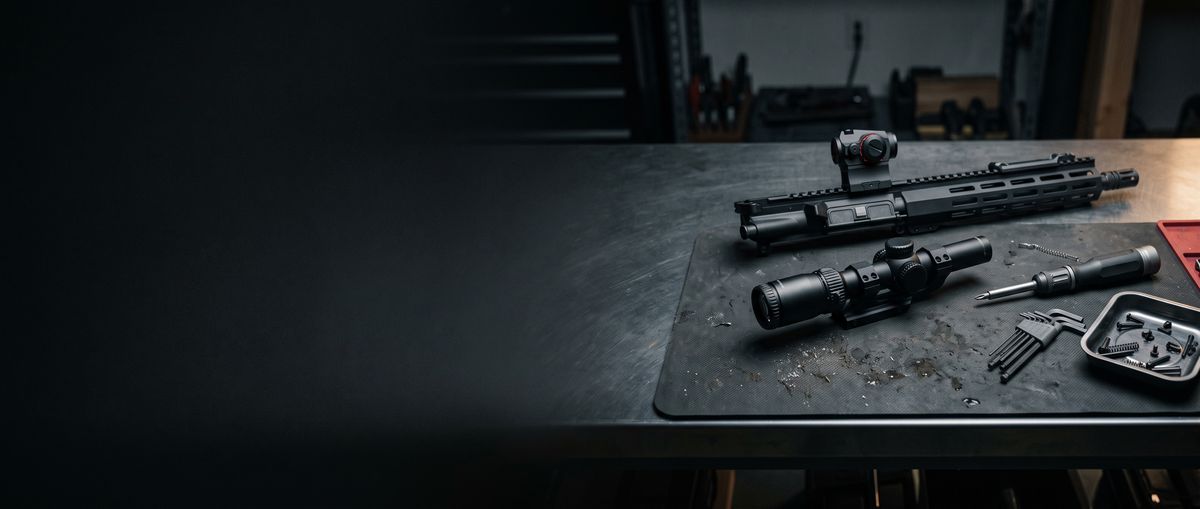
- Rifle. A standard 16-inch AR-15 in 5.56 NATO with a 1:8 twist barrel. Optic: a 1–6× LPVO with an illuminated reticle.
- Ammunition. Federal Power-Shok 64-grain soft point for varmint work; a separate 75-grain match load for the practice routine.
- Suppressor. A direct-thread 5.56 stainless can rated for full-auto and high-volume use. The stainless steel construction is the right tradeoff for a tool that lives on a homestead — rugged, weather-tolerant, and doesn’t require the ultralight titanium build of a backcountry hunting can.
- Backstop. A 12-foot earthen berm at the back of the property, faced with railroad ties, with a 200-yard clear lane to it. Every shot goes into that berm, every time.
The stainless 5.56 suppressor category is exactly the use case for the can on the line in today’s 15th Afternoon of Silence giveaway on PopularSuppressors.com — the BANISH VRMT 223 SS Stainless Varmint Suppressor. Stainless steel, full-auto rated, built for prairie heat and the kind of high-volume AR-15 work a homestead varmint rig actually sees. MSRP $579. Today’s entry window closes at 11:00 PM CT.
The legal homework before any of this matters
Before any varmint-control firearm goes into the safe, three layers of law govern its use:
- Federal. Suppressor ownership is legal under the National Firearms Act in 42 states. Form 4 transfer is required for civilian acquisition; the $200 federal tax stamp was eliminated January 1, 2026. Background check applies.
- State. States set the rules on which species may be taken, in what season, with what equipment. State DNR websites are the source of truth. Check before your first shot, not after.
- County and local. Discharge ordinances vary — some counties prohibit centerfire rifle discharge inside platted subdivisions, regardless of acreage. A working homestead on 40 acres in unincorporated land typically has the broadest latitude. A 5-acre property inside a township boundary often does not. Read your county code first.
For the broader regulatory and use-case picture across all suppressor-eligible homestead applications, our suppressors on the homestead pillar walks the 42-state legal map, the cost analysis, and the predator/hearing-protection use cases in full. The spring tick prevention guide we published this morning covers the parallel risk-reduction discipline for the human side of the same fence line.
Useful primary sources before any field use: USDA APHIS Wildlife Services publishes free technical assistance and species-specific damage guidance for landowners with confirmed varmint losses, and the U.S. Fish & Wildlife Service Migratory Bird Program is the federal authority on protected-versus-unprotected species — particularly important for raptors and other birds that may take poultry.
What a suppressor doesn’t do
The Hollywood version of a suppressor is wrong on the physics. A suppressed .223 still produces 130–140 dB — the same range as a jackhammer, a chainsaw, or a jet engine on idle at 100 feet. The neighbor will still hear it; the deer in the next field will still hear it. What the suppressor does is reduce the peak instantaneous report enough to be hearing-safe and livestock-tolerable. It is not silent. It is “quieter than a chainsaw,” not “quieter than a librarian.”
This matters because it’s the honest answer to the “you’ll just be sneaking around” objection. You won’t. You’ll be doing chore work with hearing protection and a quieter tool, and the calf in the pen 30 feet away will keep eating instead of stampeding into the fence.
Garden varmint control FAQ
Is .223 legal for varmint hunting?
In most U.S. states, .223 Remington / 5.56 NATO is legal for unprotected and nuisance species — including groundhogs, rabbits in season, coyotes, feral hogs, raccoons, opossums, and woodchucks — on private land. Some states have minimum-caliber requirements for big game (deer, elk) and may regulate or prohibit .223 for those species, but varmint species are usually open. Check your state DNR’s small-game and nuisance-species regulations before the first shot.
Are suppressors legal for hunting in my state?
As of 2026, suppressor ownership is legal in 42 U.S. states, and 42 states permit suppressor use for hunting at least one game species. The states that prohibit suppressor ownership outright are California, Delaware, Hawaii, Illinois, Massachusetts, New Jersey, New York, Rhode Island, and the District of Columbia. Among the legal-to-own states, hunting use restrictions vary by species — check your state DNR for current rules.
How loud is a suppressed .223?
An unsuppressed .223 from a 16-inch barrel produces approximately 165 decibels at the shooter’s ear. A quality .223 suppressor reduces that to roughly 132–138 decibels — below the 140-dB threshold for instantaneous permanent hearing damage. Single-use earplugs as backup bring the exposure under the 85-dB sustained-occupational threshold. The suppressed shot is “quieter than a chainsaw,” not silent.
Does a suppressor reduce accuracy?
A properly mounted suppressor on a free-floated barrel typically improves accuracy by reducing muzzle rise and felt recoil. Point-of-impact may shift slightly between suppressed and unsuppressed configurations, requiring a sight-zero confirmation; once zeroed for the suppressed configuration, group sizes typically tighten by 0.25–0.75 MOA on a tested AR-15 platform.
Do I need a tax stamp for a suppressor in 2026?
The $200 federal NFA tax stamp on suppressor transfers was eliminated effective January 1, 2026, under the One Big Beautiful Bill Act. The Form 4 transfer process and federal background check still apply for civilian acquisition; the financial barrier is gone. Form 4 approvals are running 4–11 days through Silencer Central’s direct-to-door service.
Garden varmint control: bottom line
Garden varmint control on a working homestead is a chore. Done right, it’s the quietest, most accurate, most accountable chore on the property — and for the homesteader who’s spent four seasons watching groundhogs disappear a green-bean row in three nights, it’s also the chore that pays back the most. A suppressed .223 isn’t the only tool in that toolkit. It’s the right tool for a specific 10 percent of the work that fences and traps don’t solve.
The BANISH VRMT 223 SS is on the line right now in today’s 15th Afternoon of Silence giveaway over at PopularSuppressors.com. U.S. residents can enter (suppressor-eligible states only). Worth a minute of your time.
What’s eating your garden this week? Hit reply — the regional varmint patterns we’re seeing in our subscriber base are starting to tell a story.

Reader Favorites
Homestead reference charts
Three field guides worth bookmarking — canning times, cellar storage, and safe cooking temps.
| Food | Pressure | Pint |
|---|---|---|
| Green beans | 10 lb | 20m |
| Corn | 10 lb | 55m |
| Tomatoes | water bath | 35m |
USDA/NCHFP processing times & pressures for common foods.
View full chart →| Item | Store | Keeps |
|---|---|---|
| Onions | cool, dry | 9 mo |
| Potatoes | cellar | 4–6 mo |
| Apples | cellar | 6 mo |
How long fruit & veg keep in the cellar, fridge and freezer.
View full chart → Network| Doneness | Target |
|---|---|
| Rare | 125–130°F |
| Medium-rare | 130–135°F |
| Well-done | 160°F+ |
Safe pull temps for steak & burgers, from Popular BBQ.
View full chart →