Sourdough Bread Recipe From Scratch: Two Loaves, Step by Step
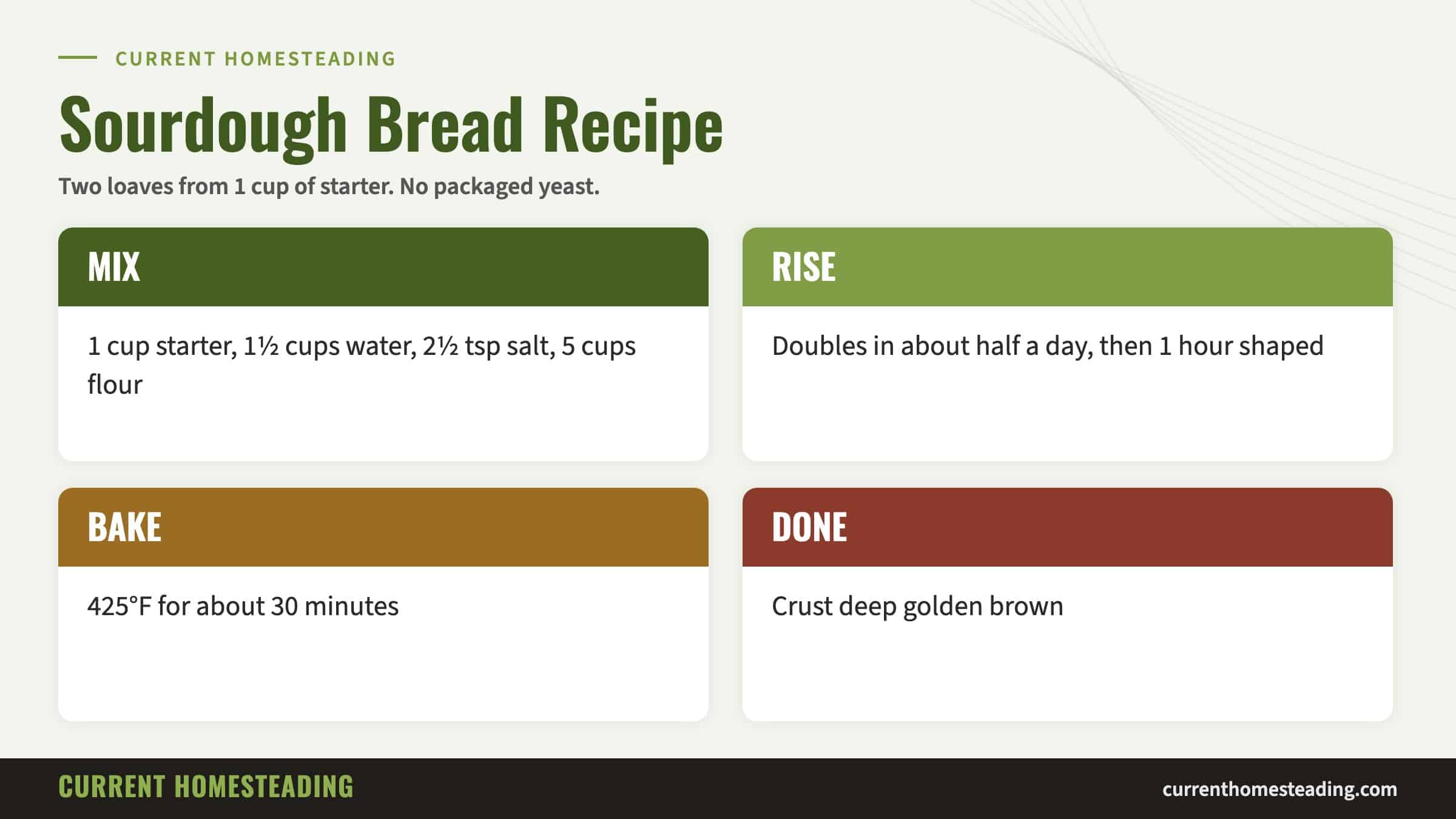
This sourdough bread recipe makes two loaves from 1 cup of starter, 5 cups of flour, water and salt, baked at 425°F for about 30 minutes.
Last updated: October 20, 2026 · Originally published January 26, 2021
Food safety note. The FDA says: “Never eat or taste raw flour, dough, or batter.” Wash your hands and counters after working the dough. The bake is what makes it safe.
Sourdough bread is what your starter has been eating all week for. There is no packaged yeast in this recipe, just the wild yeast you raised, plus flour, water and salt. It takes most of a day, but almost all of that is the dough sitting under a towel while you do something else.
Sourdough Bread at a Glance
- Makes: two oval loaves.
- Starter: 1 cup, fed recently and active.
- Rest and knead: two 1-hour rests with a knead after each.
- First rise: about half a day, until doubled.
- Second rise: about 1 hour, shaped.
- Bake: 425°F for about 30 minutes, until deep golden brown.
Sourdough Bread Ingredients
Gram weights are from King Arthur Baking’s ingredient weight chart, rounded. If you have a scale, use it.
| Ingredient | Amount | About |
|---|---|---|
| Sourdough starter, recently fed | 1 cup | 230 to 240 g |
| Warm water | 1½ cups | 340 g |
| Table salt | 2½ teaspoons | 15 g |
| Unbleached all-purpose flour | 5 cups | 600 g |
No starter yet? Start with our day-by-day starter guide and come back in about a week.

Is Your Starter Ready to Bake?
Use a starter that was fed recently and is bubbly and risen. If it has gone very foamy and started to fall, it is over-ripe. Feed it and wait for it to rise again before you bake. (Patience now saves you a flat loaf later.)
How to Make Sourdough Bread Step by Step
- Mix. In a bowl that holds at least 3 quarts, add the water and starter first so the starter spreads evenly, then the salt and flour. Mix, cover and rest 1 hour.
- Knead. Wet your hands and work the dough with your fingers and knuckles, stretching, tightening and folding until it smooths out. It will still be a little sticky, but soft enough to pull into a tight ball.
- Rest and knead again. Rest 1 more hour, then repeat the kneading to make sure the starter is worked all the way through.
- First rise. Move the dough to a lightly greased bowl of the same size (olive oil or cooking spray both work), cover, and let it rise until about doubled, roughly half a day.
- Divide and shape. On a floured surface, pull the sides of the dough to the middle to reform a ball, then cut it in half. It will deflate some. That is normal. Shape each half into an oval loaf, a little smaller than a store-bought loaf.
- Second rise. Cover both loaves and let them rise about 1 hour, until they puff up. Preheat the oven to 425°F during this rise.
- Mist and slash. Mist the loaves with warm water from a clean spray bottle. That keeps the crust soft a little longer so the bread can rise more in the oven. Dust with flour if you want the look. Then slash each loaf diagonally three times, about a quarter of the way deep, so the sides do not tear as it rises.
- Bake. Bake about 30 minutes, until the crust is a deep golden brown.
Timing Your Rise
Half a day is a starting point, not a rule. In a warm kitchen the dough can double in nearly half the time, and in a cold kitchen it can take longer. Basically, watch the dough, not the clock. A clear bowl makes this easy, because you can see the bubbles and the height without lifting the cover.
How to Tell When Sourdough Bread Is Done
The old version of this recipe said to bake until the inside hits 210°F. Here is the catch: King Arthur Baking says a loaf’s interior “will never rise above 212°F, since that’s the boiling point of water,” so a crusty loaf can read close to that while the crust is still pale. For crusty bread, King Arthur says to rely on crust color, and “simply bake until thoroughly browned.” A thermometer is a good backup, not the whole test.
Storing Sourdough Bread
Let the loaves cool, then wrap them loosely in plastic and keep them at room temperature for several days. For longer, freeze them. If a loaf is frozen, thaw it on the counter in its wrap.
Frequently Asked Questions
How much starter do I need for sourdough bread?
This recipe uses 1 cup of recently fed starter, about 230 to 240 grams, for two loaves.
How long does sourdough bread take to make?
Most of a day. Plan on two 1-hour rests, about half a day for the first rise and 1 more hour after shaping, then 30 minutes in the oven.
What temperature do you bake sourdough bread at?
425°F for about 30 minutes, until the crust is deep golden brown.
Why do you slash sourdough bread before baking?
So it can expand in the oven without tearing at the sides. Three diagonal slashes about a quarter of the way deep do the job.
Can you eat raw sourdough dough?
No. The FDA says to never eat or taste raw flour, dough or batter. Bake it first.
Slice a loaf while it is still a little warm and spread on some homemade chèvre. Then feed your starter, because the next batch starts there.
Sources: King Arthur Baking, “Ingredient Weight Chart” and “Sourdough Starter” and “Using a thermometer with yeast bread”; U.S. Food and Drug Administration, “Handling Flour Safely: What You Need to Know”.


Reader Favorites
Homestead reference charts
Three field guides worth bookmarking — canning times, cellar storage, and safe cooking temps.
| Food | Pressure | Pint |
|---|---|---|
| Green beans | 10 lb | 20m |
| Corn | 10 lb | 55m |
| Tomatoes | water bath | 35m |
USDA/NCHFP processing times & pressures for common foods.
View full chart →| Item | Store | Keeps |
|---|---|---|
| Onions | cool, dry | 9 mo |
| Potatoes | cellar | 4–6 mo |
| Apples | cellar | 6 mo |
How long fruit & veg keep in the cellar, fridge and freezer.
View full chart → Network| Doneness | Target |
|---|---|
| Rare | 125–130°F |
| Medium-rare | 130–135°F |
| Well-done | 160°F+ |
Safe pull temps for steak & burgers, from Popular BBQ.
View full chart →